
Estimated reading time: 12 minutes
Key Takeaways
- Sam Altman and OpenAI have offered $2 million worth of compute tokens to every startup in the current Y Combinator batch.
- This is a compute-for-equity deal, meaning OpenAI gets ownership stakes in these startups when they raise their Series A funding.
- The move dramatically changes the traditional model of free cloud credits that tech giants have offered for over a decade.
- It raises serious questions about platform risk, vendor lock-in, and power concentration in the AI ecosystem.
- This could set a precedent that permanently alters how early-stage startup funding works in Silicon Valley.
- Founders must carefully weigh the benefits of $2M in compute power against the dilution and strategic constraints of having OpenAI as both vendor and investor.
Table of contents
- What Actually Happened on Tuesday Night?
- Why is the Startup World Freaking Out?
- The Y Combinator Connection: A Power Play
- The Big Trap? Platform Risk and Lock-In
- The Noise: Why Everyone is Talking About It
- What This Means Strategically for the Big Players
- How This Shakes Up the Tech and VC Ecosystem
- The Bottom Line
- Frequently Asked Questions
Hello, startup world! I am Nikita Blanc, the founder of HeyEveryone.io. Here at HeyEveryone, our team spends every single day thinking about startup funding. We know how hard it is for early-stage startups to get the money they need to grow. We help founders reach out to investors so they do not have to waste months sending cold emails that nobody reads.
We keep a very close eye on the venture capital world. But this week, a massive earthquake just hit the tech industry, and we have to talk about it.
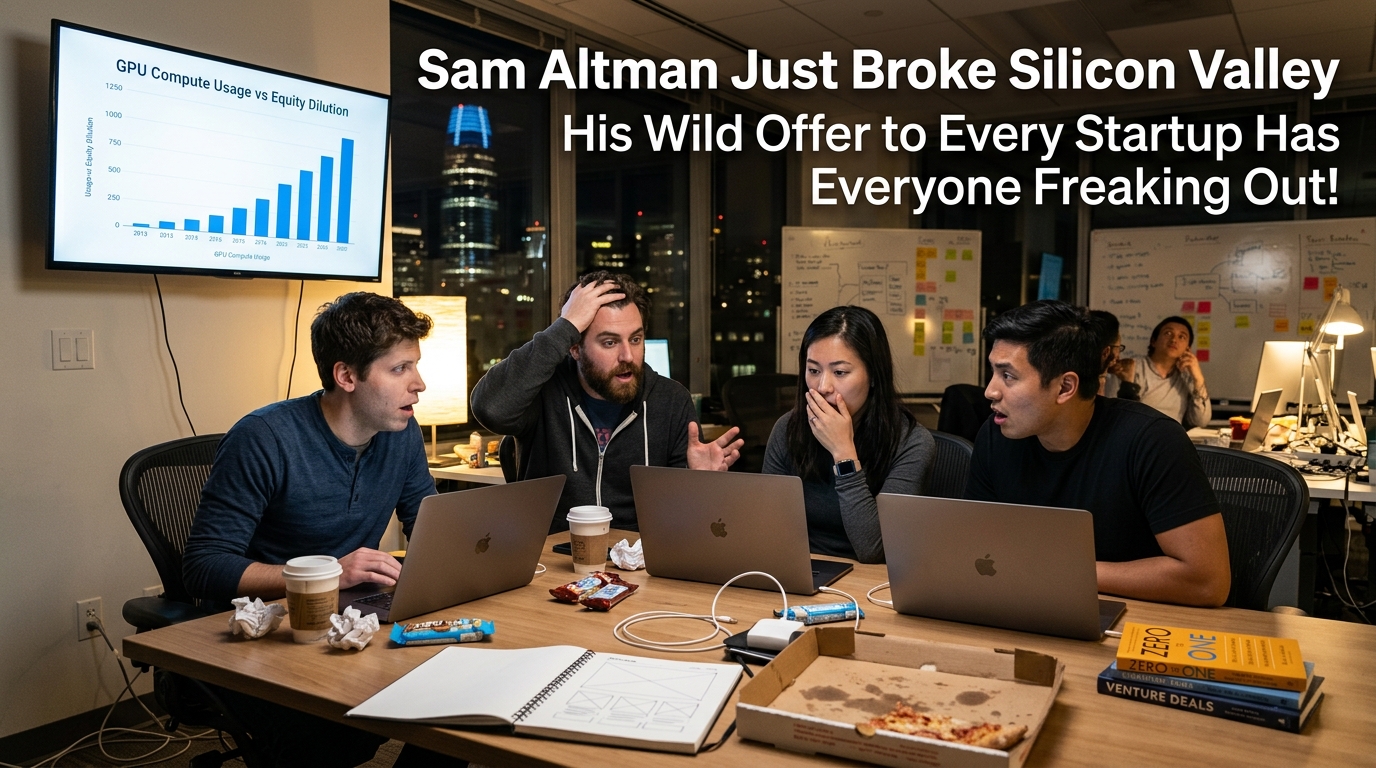
If you have been reading the news, you might have seen the headline: Sam Altman Just Broke Silicon Valley – His Wild Offer to Every Startup Has Everyone Freaking Out!
Yes, you read that right. Sam Altman, the famous boss of OpenAI, just dropped a total bombshell on the tech world. He made a jaw-dropping offer that could change the way startup funding works forever. It has angel investors sweating, founders cheering, and giant tech companies scrambling.
What Actually Happened on Tuesday Night?
To understand this wild story, we need to look at what took place over the last couple of days. Rumors started flying around, and then multiple reports confirmed the massive news.
It all started at a special event. The offer was described as being made at a YC event on Tuesday night, and Altman also posted about it on X shortly afterward, sending the internet into a total frenzy. You can read more about how OpenAI just offered $2M in tokens to every YC startup.
Here are the shocking details of the deal:
Sam Altman, CEO of OpenAI, has offered $2 million worth of OpenAI “tokens” to every startup in the current Y Combinator cohort, according to recent reports.
Now, you might be wondering, what on earth is an OpenAI token? Think of tokens like digital arcade coins. You use these tokens to pay for the super smart computer power that OpenAI provides. When startups want to build cool new artificial intelligence tools, they need a lot of computer power – known as “compute” – to make it work. OpenAI is giving each of these lucky companies $2 million worth of this compute power.
But wait, there is a catch. This is not a gift.
This new deal is framed as “compute-for-equity”: the tokens are infrastructure credits for OpenAI’s models that convert into an equity stake in the startup at its next priced round, which is typically the Series A funding round. You can check out the details on this compute-for-equity model here.
In simple terms, “equity” means owning a piece of the company pie. OpenAI is saying, “We will give you $2 million worth of our computer power today. In exchange, when you raise more money from venture capital investors later, we get to own a piece of your company.”
It is important to note that this wild offer is not for everyone. The target group is only the current Y Combinator batch, not every startup in the world. YC’s cohorts are generally on the order of a few hundred companies, not thousands, as noted in this report. Still, a few hundred companies getting $2 million each is a mind-blowing amount of value!
Why is the Startup World Freaking Out?
If you are new to the startup ecosystem, you might be asking yourself why this is such a big deal. Companies make deals all the time, right? Well, this specific deal is turning the whole system upside down.
Some news coverage explicitly frames this as OpenAI “investing” $2M in tokens into every YC startup, essentially turning cloud credits into a quasi-VC check where the currency is compute. You can learn more about this quasi-VC check concept here.
Here is why founders, angel investors, and big tech giants are completely shocked.
1. The End of Free Cloud Credits
For over ten years, giant tech companies have been very generous to early-stage startups. Programs like AWS Activate, Google Cloud for Startups, and Microsoft for Startups have given out billions in credits to startups – crucially, without taking equity in return. You can read about this history of free credits.
These companies gave away free computer power because they wanted startups to build on their platforms. They hoped that when the startups grew into massive, rich companies, they would stay loyal and start paying huge bills.
OpenAI’s move completely changes that friendly game. Instead of saying, “Here is free API credit to get started,” OpenAI’s model is much more aggressive: “Here is massive compute capacity worth $2M – and we want an equity position in your company for it.”
This totally blurs the line between vendor and investor in a way the traditional cloud players have mostly avoided, as experts point out. Normally, the people who sell you tools (vendors) are different from the people who give you money for a piece of your business (investors). Now, OpenAI is acting as both!
2. Compute is the New Cash
In the past, when founders finished their pitch deck, they wanted one thing: cash. Cash pays for offices, salaries, and marketing. But in the age of artificial intelligence, things have changed.
Commentary from investors and analysts is framing this as part of a broader shift: in the AI era, compute is often the true scarce resource, not just cash. Having a top-tier model provider like OpenAI offer compute as capital – tied to equity – turns infra providers into direct cap table participants, similar to strategic corporate investors but with an even deeper product dependency. You can dive deeper into how compute is acting as capital here.
This is a massive threat to traditional venture capital firms. Imagine you are an investor who wants to give a startup a $2 million seed round check. Suddenly, OpenAI swoops in and says, “We will give them $2 million in computer power instead!” Since AI startups spend most of their cash on computer power anyway, OpenAI is becoming a direct competitor to traditional money investors.
The Y Combinator Connection: A Power Play
To really understand why people are whispering in the hallways of Silicon Valley, you need to know the history between Sam Altman and Y Combinator.
Y Combinator (YC) is the most famous startup boot camp in the world. It is a massive deal to get accepted. But there is a deep personal connection here. Context is key: Sam Altman is a former YC founder himself with a company called Loopt, and he later became president of Y Combinator from 2014 before leaving to focus on OpenAI. You can read more about Altman’s background here.
Because of this history, this wild offer re-entangles YC and Altman’s OpenAI in a very direct, financial way. It makes YC’s flagship batch a pipeline of future OpenAI-aligned companies – especially those heavily dependent on OpenAI models.
Many people are worried about this. It can easily be spun as “YC is now the front door for OpenAI’s strategic cap table.” This raises real fears of platform favoritism, “clubby” dynamics, and less neutrality in the tech ecosystem. If you are a startup in YC, will you feel forced to use OpenAI just because Sam Altman used to run the show? It is a giant question mark that has everyone talking.
The Big Trap? Platform Risk and Lock-In
While $2 million sounds like a dream come true for early-stage startups, many experts are waving red warning flags. This is what we call “platform risk.”
Founders and investors worried about “building on someone else’s land” now have a new angle to consider. If you accept $2M in tokens from OpenAI in exchange for equity, and build your stack tightly around OpenAI’s APIs, your negotiating leverage and optionality shrink.
Think about it like this: If you build your entire digital house using only OpenAI’s special bricks, and OpenAI also owns a piece of your house, it becomes incredibly hard to move. Competitors like Anthropic, Google, Meta, or open-source LLMs may be harder to adopt meaningfully later. Why? Because you are contractually and economically tied to OpenAI, and you risk awkward strategic conflict if you try to multi-home or switch. You can see why switching away becomes difficult here.
Investors are asking tough questions:
- Are we OK with a core vendor also being a major shareholder?
- Does this tilt the boardroom in favor of OpenAI’s roadmap and pricing, instead of what is best for the startup?
- What happens if OpenAI raises its prices and the startup is totally trapped?
These are scary thoughts for anyone trying to build a safe, independent business.
The Noise: Why Everyone is Talking About It
The “everyone is freaking out” narrative is not an exaggeration. It is driven by several massive anxieties that are shaking the tech world to its core.
First, there is the fear of Precedent-setting. If this wild trick works, other providers like hyperscalers, model labs, and infra companies may copy the compute-for-equity model. This would structurally change how early-stage deals are done forever.
Second, there is the Power concentration in AI. OpenAI is already central to the current AI wave; coupling its technology dominance with equity stakes in the next generation of YC startups increases its long-term influence, as discussed in this article.
Third, there is the Signal to the market. YC remains one of the most powerful filters and amplifiers for early-stage companies. A blanket offer there is effectively a carefully targeted “index bet” on the top of the global early-stage funnel. OpenAI is basically betting on all the smartest kids in the class at the exact same time.
Finally, there are the Valuation and dilution puzzles. $2M in credits is huge for very early startups. But how do you price that? At what implied valuation are those credits converting? What happens if a company would have used OpenAI anyway as a pure vendor? Now they are paying with equity instead of just cash. It is a giant math headache for everyone involved.
What This Means Strategically for the Big Players
Let us break down what this means for the different groups involved in this massive drama.
For OpenAI
This move is a brilliant, aggressive chess play. It helps OpenAI lock in future demand for its models from some of the most watched young startups on the planet. It also lets OpenAI acquire portfolio upside in YC’s winners, not just usage revenue. Finally, it deepens product feedback loops by embedding into startups’ tech stacks very early on.
This fits perfectly with Altman’s broader strategy of going very big, very fast on AI infrastructure and ecosystem control, including his previously reported ambitions of adding gigawatts of AI compute capacity and building a trillion-dollar-scale AI company. You can read all about his trillion-dollar vision here.
For Y Combinator
For YC, this is a double-edged sword. On one hand, YC gains an additional source of capital-adjacent support for its companies. It strengthens YC’s branding as the place where AI-first startups go to get immediate access to top-tier models and cheap compute at scale.
But YC also risks something very important: its reputation. There is a real perception that its batches are now pre-aligned with OpenAI by default. This may concern founders who prefer to build with Anthropic, Google, Meta, or open-source models, or investors who are extremely wary of platform capture.
For Founders in the Batch
Imagine you are a founder who just got into YC. You are thrilled! Then, Sam Altman hands you a golden ticket worth $2 million. Do you take it?
The upside is obvious. $2M in compute can be completely transformative. You can train better models, run more experiments, and acquire users much faster. It might also reduce your near-term cash burn, since your heavy infrastructure costs are partially offset.
But the downside is heavy. You face additional dilution at the next priced round, meaning you own less of your own company. You also face stronger lock-in to one single AI provider’s ecosystem. Most importantly, you send potentially complicated signaling to future investors: “Our biggest vendor is also a cap table stakeholder.”
Founders will need to be very careful. They must scrutinize:
- The exact legal instrument being used, such as the SAFE or convertible terms
- Valuation caps and pro-rata rights
- Any minimum-spend or usage commitments tied to those tokens
- Whether they can meaningfully multi-home or switch away from OpenAI later without awful economic penalties
How This Shakes Up the Tech and VC Ecosystem
This is not just a passing news story. This could permanently alter the DNA of Silicon Valley.
We are witnessing the birth of a new asset class in early-stage funding. Instead of just “cash-for-equity” and “strategic money,” we now have compute-for-equity as a first-class deal structure.
We are also seeing the blurring lines between infrastructure and finance. OpenAI is both critical infrastructure and a quasi-venture investor. That dual role is likely to be very controversial in policy, antitrust, and ecosystem debates going forward.
This puts immense pressure on incumbents like AWS, Google Cloud, and Microsoft. They have a tough choice to make. They either keep giving non-equity credits and risk looking less “founder-friendly” in terms of strategic upside, or they start demanding equity too. If they demand equity, the funding landscape could tilt toward infrastructure-driven, platform-aligned cap tables.
Lastly, this creates more intense winner-take-most dynamics in AI tooling. If OpenAI successfully ties many YC winners to its stack via equity, it could reduce the room for rival model providers in those high-growth companies. It could turn OpenAI into a kind of AI-native Berkshire Hathaway or SoftBank-style index on the startup ecosystem – but with much tighter product dependence.
The Bottom Line
Let us review the simple facts of this mind-blowing week.
The factual core is clear: Sam Altman and OpenAI have indeed offered $2M worth of OpenAI tokens (compute credits) to every startup in the current Y Combinator batch, in exchange for equity that converts at the next priced round. You can confirm the facts of the offer here.
Why is it such a big deal that it broke Silicon Valley? Because it institutionalizes compute-for-equity, tightens the powerful YC-OpenAI relationship, challenges traditional VC and cloud-credit norms, and raises deep, difficult questions about platform risk, concentration of power, and the future shape of startup financing.
The startup world is moving faster than ever before. Whether you are building an AI app in your garage or you are a seasoned investor, the rules of the game just changed. As founders navigate this thrilling, scary new landscape, staying informed and making smart connections has never been more vital.
The tech world is holding its breath to see what happens next. Will other tech giants follow OpenAI’s lead? Will founders push back against giving up their equity for digital tokens? Only time will tell, but one thing is absolutely certain: Sam Altman sure knows how to get everyone talking.
Frequently Asked Questions
What exactly are OpenAI tokens?
OpenAI tokens are essentially digital credits that startups can use to pay for OpenAI’s compute power and AI model services. Think of them like arcade tokens – you exchange them for access to OpenAI’s infrastructure, APIs, and AI models to build your products.
Is this offer available to all startups or just Y Combinator companies?
This specific offer is only available to startups in the current Y Combinator batch. It is not a general offer to all startups. YC batches typically consist of a few hundred companies, making this a very targeted, strategic move by OpenAI.
What does “compute-for-equity” actually mean?
“Compute-for-equity” means that instead of OpenAI giving startups free credits or cash investment, they provide $2 million worth of computing power in exchange for an ownership stake in the company. This equity stake converts at the startup’s next priced funding round, typically Series A.
How is this different from traditional cloud credits from AWS or Google?
Traditional cloud credit programs from AWS, Google Cloud, and Microsoft have historically given startups free credits without taking equity. They view it as customer acquisition – hoping startups will become paying customers as they grow. OpenAI’s model is fundamentally different because they are demanding ownership in the company in exchange for the compute resources.
What are the risks of accepting this offer?
The main risks include:
- Dilution: You will own less of your company when OpenAI’s equity converts
- Platform lock-in: You become deeply dependent on OpenAI’s infrastructure, making it difficult to switch to competitors
- Vendor-investor conflict: OpenAI becomes both your critical vendor and an investor, which can create complicated dynamics
- Reduced negotiating power: Future pricing negotiations become awkward when your vendor also owns part of your company
Could other tech companies follow OpenAI’s example?
Absolutely. Many experts believe this could set a precedent-setting trend. If OpenAI’s strategy proves successful, other infrastructure providers like AWS, Google Cloud, and Microsoft might start demanding equity in exchange for cloud credits. This would fundamentally reshape the early-stage startup funding landscape.
Why is Sam Altman’s history with Y Combinator significant?
Sam Altman was a YC founder himself (with a company called Loopt) and later served as president of Y Combinator from 2014 before moving to OpenAI. This personal history creates a powerful connection and raises questions about whether this deal creates unfair advantages or “clubby” dynamics in the tech ecosystem.
Should founders accept this offer?
It depends on your specific situation. Founders should carefully consider:
- How much of their budget would go to compute anyway
- Whether they plan to build primarily on OpenAI’s models
- The exact terms of the equity conversion
- Their comfort level with platform dependency
- How future investors might view this arrangement
For AI-heavy startups that would spend significant cash on compute, this could be transformative. For others, the dilution and lock-in might not be worth it.