
Estimated reading time: 8 minutes
Key Takeaways
- KC Green, creator of the iconic “This is fine” meme, is accusing AI startup Artisan of stealing his art for subway ads.
- The startup used Green’s famous burning dog illustration without permission to promote their AI sales tool.
- Green publicly stated his work was “stolen like AI steals” and urged fans to vandalize the ads.
- This case highlights the broader controversy around AI companies using artists’ work without consent or compensation.
- Legal action appears imminent, with strong copyright infringement claims based on Green’s commercial history with the meme.
- The incident serves as a warning to startups about the importance of respecting intellectual property rights.
Table of contents
- The Core Story: What Exactly Happened?
- The Furious Response: “Stolen Like AI Steals”
- The Startup Stays Quiet
- The Incredible History of “This is fine”
- How This Sparks the Massive AI Art Controversy
- The Legal and Policy Nightmares
- The Public Outrage: A Boiling Point
- Quick Timeline of the Drama
- Why This Matters for the Startup Fundraising Space
- Frequently Asked Questions
If you have been on the internet at any point in the last ten years, you know the meme. A little dog wearing a hat sits at a table. The room around him is completely engulfed in bright orange flames. He takes a sip from his mug and says, “This is fine.” It is the ultimate joke about ignoring a massive disaster.
But right now, the creator of this famous art is not feeling fine at all. In fact, a massive fire is blowing up in the tech world. The core concept of the story is simple but wild: The creator of the iconic “This is fine” meme is accusing an AI startup of stealing his art. This taps into the heated debate about AI’s use of artists’ work without permission, sparking outrage among creators and internet users.
At HeyEveryone, we love seeing startups grow, raise funding, and use artificial intelligence to do amazing things. But this story shows what happens when things go totally wrong. Let us dive into the details of this crazy David vs. Goliath battle, the legal drama, and the massive outrage it has caused online!
The Core Story: What Exactly Happened?
To understand this drama, we need to look at the two main players.
First, we have the artist. His name is KC Green. He is an American cartoonist and the brilliant mind behind the 2013 webcomic strip called “On Fire,” which was part of his comic series known as Gunshow. This two-panel comic of the calm dog in the burning room became one of the most famous memes in history.
On the other side of the ring is a brand new tech company. The AI startup is named Artisan. They are a sales-focused company that sells an “AI BDR” – which stands for artificial intelligence business development rep – named Ava. Startups often use tools like this to boost their sales, reach out to investors, and secure much-needed fundraising.
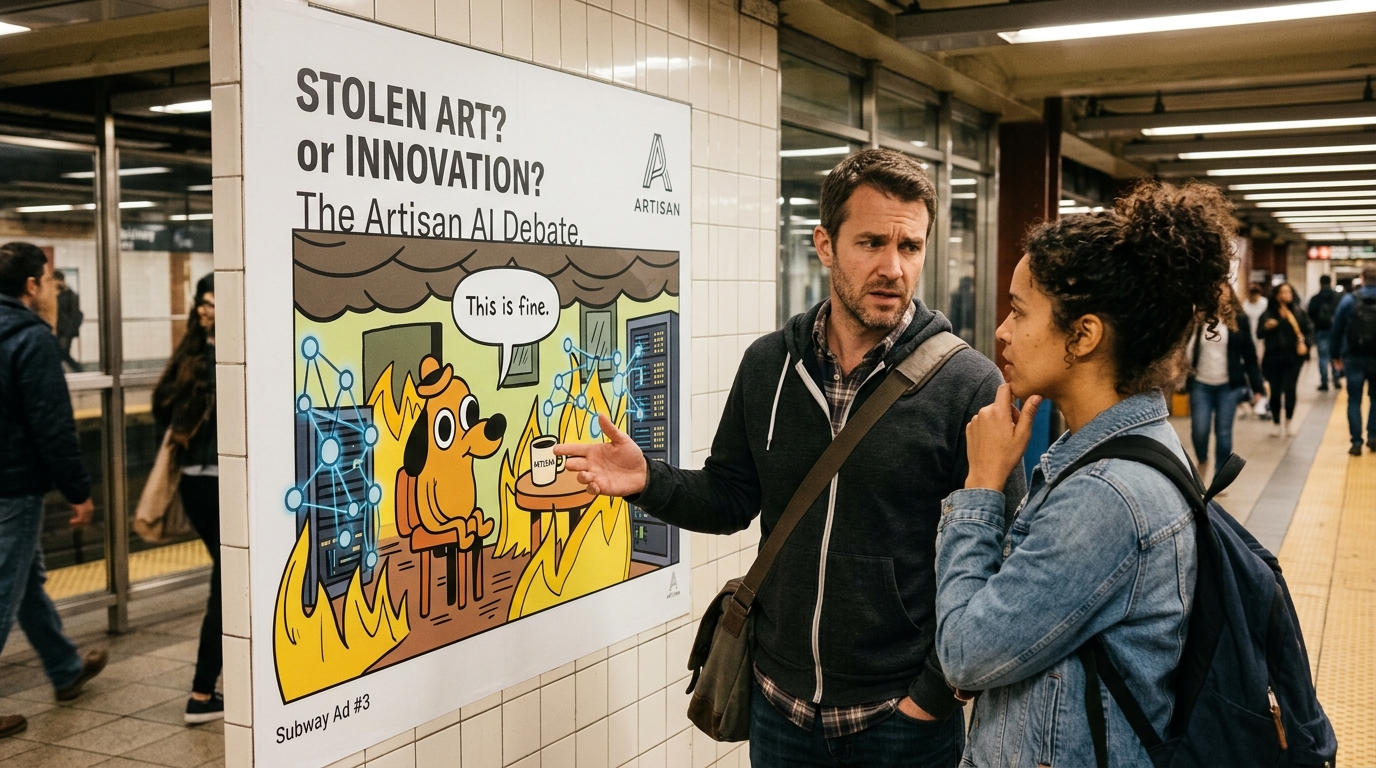
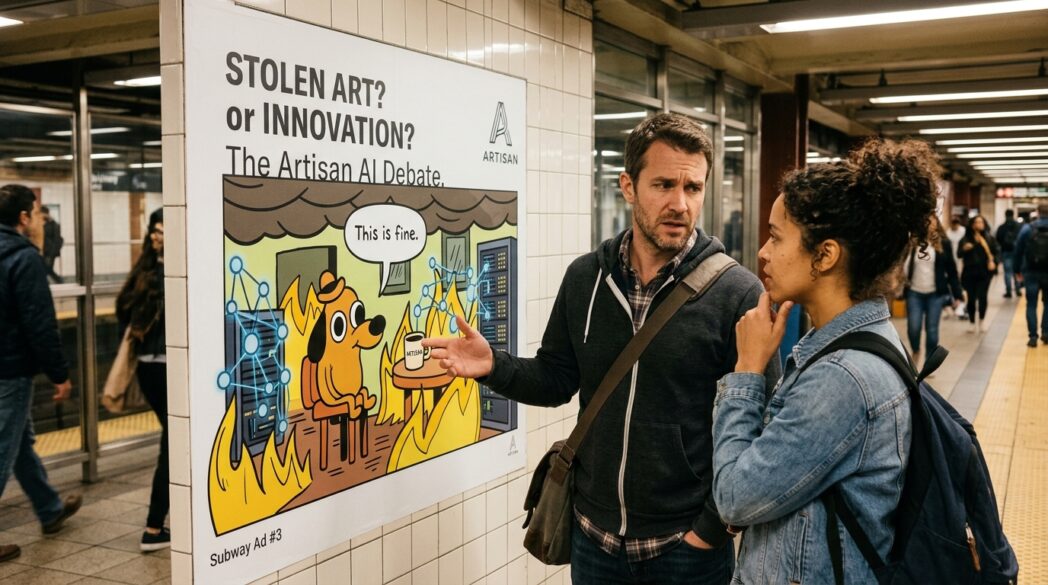
The drama started around late April and early May of 2026. KC Green found out that Artisan was running a subway ad campaign that used his highly famous “This is fine” comic art. The catch? They did this completely without his permission.
When people walked through the subway, they saw a printed poster ad that looked almost exactly like Green’s original drawing. It showed the famous dog in the burning room. However, the text balloon was changed. Instead of saying “This is fine,” the dog was saying: “My pipeline is on fire.” Below that, the ad told people to “Hire Ava the AI BDR”.
This was not just a funny fan making a joke on social media. This was an ad for a commercial product built by a startup trying to make money. And it was plastered in public subway stations for everyone to see.
The Furious Response: “Stolen Like AI Steals”
When an artist sees their hard work used to sell a product without permission, they usually get upset. But KC Green did not just get upset. He went on the offensive.
Green took to the social media platform Bluesky to share his anger. He confirmed to his fans that he never agreed to this use of his work. He was very clear that his art was taken from him. He described the use of his image as “stolen,” and gave a very powerful quote, saying, “it’s been stolen like AI steals”.
He was so frustrated that he even gave his followers a shocking call to action. He told them to “please vandalize it if and when you see it”. This shows just how angry and desperate creators feel when big tech companies take their art.
Now, this battle is moving from social media to the courtroom. One news outlet recently framed the situation perfectly with the headline: “Artist sues AI company over unauthorized use of ‘This is fine’ meme”. This strongly implies that major legal action is happening right now.
You see, KC Green has treated this meme as a real business for years. He has exploited the meme commercially through selling prints, licensed merchandise, and even a video game deal. Because he has an active track record of making money from this art, his legal claim is very strong. This is a protected asset, not just a random picture on the web.
The Startup Stays Quiet
What does the AI startup have to say about all this? Surprisingly, very little.
Right now, the media knows Artisan as a San Francisco-based AI startup that builds AI sales agents for companies. But there is almost no detailed response from them in the news.
They have not issued a formal apology. They have not explained themselves. They have not claimed they bought a license. The narrative is heavily one-sided right now. The artist is screaming from the rooftops, and the startup is remaining totally silent. For a company that helps other businesses communicate and grow their sales pipeline, their own communication is completely broken right now.
The Incredible History of “This is fine”
To fully grasp why this story has blown up, we have to look back at the cultural weight of this meme.
The original comic strip was published back in 2013 in the webcomic Gunshow. Between 2014 and 2016, the image of the calm dog in the fire went incredibly viral. It became one of the most enduring memes of the entire decade, used by everyone to symbolize denial or coping with a disaster.
KC Green did not just let the meme fade away. He worked on a video game adaptation titled This is Fine: Maximum Cope. He built a real business around this character. So, when an AI startup uses his exact layout for a paid ad campaign, it is not just borrowing a funny joke. It is taking a valuable piece of property.
How This Sparks the Massive AI Art Controversy
This story is like a match dropped into a bucket of gasoline. It connects perfectly to the massive, ongoing war between human artists and artificial intelligence.
Generative AI models are trained on gigantic datasets of scraped images. The biggest problem? The AI companies get no direct consent from the artists, and they offer no compensation tied back to specific works. Artists argue that their unique styles are mimicked without permission and used to generate commercial content.
When KC Green said his work was “stolen like AI steals,” he connected two big issues. He linked the old-school theft of copying an exact image into an ad, with the new, confusing theft of AI models swallowing artists’ work and spitting out copies.
The internet is deeply split on this topic. Some people argue strongly that AI art is inherently “stolen art” because it is built on datasets without licenses. Other people disagree. They say that an AI learning from existing art is not theft at all, just like a human artist learning from a master is not theft.
But this specific subway ad case is powerful because it skips the confusing “training” debate. It is simple. Everyone looks at the ad and immediately sees obvious theft. It is the exact famous meme, with the exact same layout and character, used in a paid commercial ad.
The Hypocrisy of Big Tech
There is another big tension here. AI startups usually get a lot of venture capital funding. They move fast. They monetize quickly. They tell the world they are disrupting creative work.
When these well-funded companies are caught using unlicensed art in their very own ads, it fuels a huge narrative of hypocrisy and an unfair power imbalance. People see a rich startup taking advantage of an individual cartoonist. They ask: If this company is so smart and advanced, why did they not just pay the artist for his work?
The Legal and Policy Nightmares
This situation brings up massive legal issues. Even though we do not have all the court papers in our hands yet, the laws are clear.
Using the original “This is fine” panels for a paid commercial ad without a license is classic copyright infringement. The startup cannot easily defend this as “fair use.” Why? Because the ad has a commercial purpose. It uses the very heart of the original work. And it is not very transformative – it is still just the “This is fine” dog, but with a sales joke. KC Green’s history of making money from the meme strongly supports his claims for financial damages.
This also highlights the difference between fun internet memes and corporate ads. When a normal person shares a meme online, it is noncommercial. No one gets sued. But when a company prints it on a subway poster to sell a product, the rules change entirely.
Lawmakers and courts are already struggling with these policy debates. They are trying to figure out how to compensate creators whose work trains AI models. Cases like KC Green’s feed into the huge argument that creators need much stronger protections in the age of AI.
The Public Outrage: A Boiling Point
If you look at social media platforms and Reddit, you will see a massive wave of sympathy and outrage from artists and normal internet users.
People are folding this single subway ad story into all their existing grievances. They are tired of AI art flooding their video games and art communities. They are furious about the lack of consent or payback for training data. They see this subway ad as confirmation of their worst fears: AI companies simply do not respect artists.
When KC Green told his fans to “please vandalize it,” it sparked even more intense debate. People started arguing about the ethics of defacing public ads. But more than anything, it showed the deep desperation and anger that artists feel when the legal system seems too slow to protect them.
Quick Timeline of the Drama
To keep everything straight, here is a quick timeline of how this explosion happened:
- 2013: KC Green publishes the “On Fire” comic strip in Gunshow. The panels later become famous.
- 2010s – 2020s: The meme goes completely viral. Green monetizes it through merchandise and a video game project.
- Late April / Early May 2026: Subway ads for the AI startup Artisan appear. They use the famous imagery to promote Ava the AI BDR.
- May 3 – 4, 2026: Green posts his furious message on Bluesky. He calls the art “stolen like AI steals” and urges fans to vandalize the posters.
- Early May 2026: News coverage explodes. Outlets frame the situation as an imminent lawsuit against the startup.
Why This Matters for the Startup Fundraising Space
At HeyEveryone, we deeply understand the hustle of building a startup. Founders are always looking for the best ways to grow, to get attention, and to master the startup fundraising space. You need investors. You need meetings. You need to stand out.
Using AI to automate your outreach and connect with people is an incredible superpower. It saves time and helps founders focus on building great products. But there is a right way and a wrong way to use technology.
The wrong way is cutting corners. Stealing art, ignoring copyright rules, and pushing artists to the breaking point might get a company some quick attention. But it also destroys trust. It ruins your reputation. And it invites massive, costly lawsuits that can destroy a business overnight.
The right way is using AI ethically. It is about using data smartly to craft personalized, highly relevant messages that real people actually want to read. That is how you book meetings. That is how you secure funding. Respecting creators and building real relationships is the only way to build a startup that lasts.
The story of KC Green and Artisan is not just a funny internet drama. It is a massive warning sign. As AI becomes more powerful, the rules of the game are being tested. This David vs. Goliath fight is going to set the stage for how art, technology, and business mix in the future.
Will the artist win his lawsuit? Will the startup finally apologize? Or will this just become another chaotic chapter in the wild world of artificial intelligence? One thing is for certain: for KC Green and thousands of other artists fighting for their rights, things are definitely not fine.
Stay tuned as we continue to watch this story unfold. The internet is watching, the courts are waiting, and the future of AI art is hanging in the balance!
Frequently Asked Questions
Who is KC Green?
KC Green is an American cartoonist who created the iconic “This is fine” meme in 2013 as part of his Gunshow webcomic series. He has successfully monetized the meme through merchandise, prints, and a video game project.
What did the AI startup Artisan do wrong?
Artisan used KC Green’s “This is fine” artwork in a subway advertising campaign without obtaining permission or licensing rights. They modified the text to promote their AI sales tool, using the protected artwork for commercial purposes without compensation to the artist.
What does “stolen like AI steals” mean?
This phrase references the broader controversy around AI companies training their models on artists’ work without consent or compensation. Green drew a parallel between the direct theft of his artwork and the way AI systems are trained on scraped creative content without permission.
Is KC Green taking legal action?
While specific court filings have not been detailed in all reports, news outlets have indicated that legal action appears imminent or underway. Green has a strong copyright infringement case given his commercial history with the meme and the unauthorized commercial use by Artisan.
Why is this case important for other artists?
This case highlights the ongoing struggle artists face in protecting their work in the age of AI and digital reproduction. It demonstrates the need for stronger intellectual property protections and sets a potential precedent for how courts will handle unauthorized commercial use of creative work by tech companies.
What should startups learn from this incident?
Startups should always obtain proper licenses and permissions before using creative work, especially for commercial purposes. Cutting corners on intellectual property rights can result in costly lawsuits, damaged reputation, and destroyed business relationships that far outweigh any short-term gains from unauthorized use.