
Estimated reading time: 10 minutes
Key Takeaways
- Warhound came out of stealth with a $200 million seed round at a $1.2 billion valuation to clone and gene-edit elite working dogs.
- The “arming them with Anduril gear” claim refers to protective and sensor equipment, such as body armor, goggles, and awareness tools, not weapons on dogs.
- The company was founded by Ben Lamm of Colossal Biosciences, and Palmer Luckey reportedly holds no equity and has no day-to-day role.
- No engineered dogs exist yet. First puppies are expected in early 2027, with service hoped for about two years later.
- Animal-rights groups like PETA have condemned the plan, while Warhound says animal welfare is central to its mission.
Table of contents
- Key Takeaways
- What Is Warhound, and Why Is Everyone Talking About It?
- The Big Money Behind the War Dogs
- Meet the People Behind Warhound
- How Would Warhound Actually Build These Dogs?
- “Arming Them With Anduril Gear”: What Does That Really Mean?
- Why Does Warhound Say This Is Needed?
- Do These Dogs Exist Yet? Not Quite.
- What About Animal Welfare?
- The Controversy: Why People Are Angry
- What About the Rules?
- Fact-Check: What’s True and What’s Hype?
- Why This Story Went Viral
- What to Watch Next
- The Bottom Line
- Frequently Asked Questions
Imagine a dog that has been cloned from the best working dog in the country. Imagine its genes have been edited so it is healthier and stronger. Now imagine it wearing a high-tech vest and goggles built by one of the biggest names in defense technology.
It sounds like a scene from a sci-fi movie. But a startup called Warhound says it is making it real.
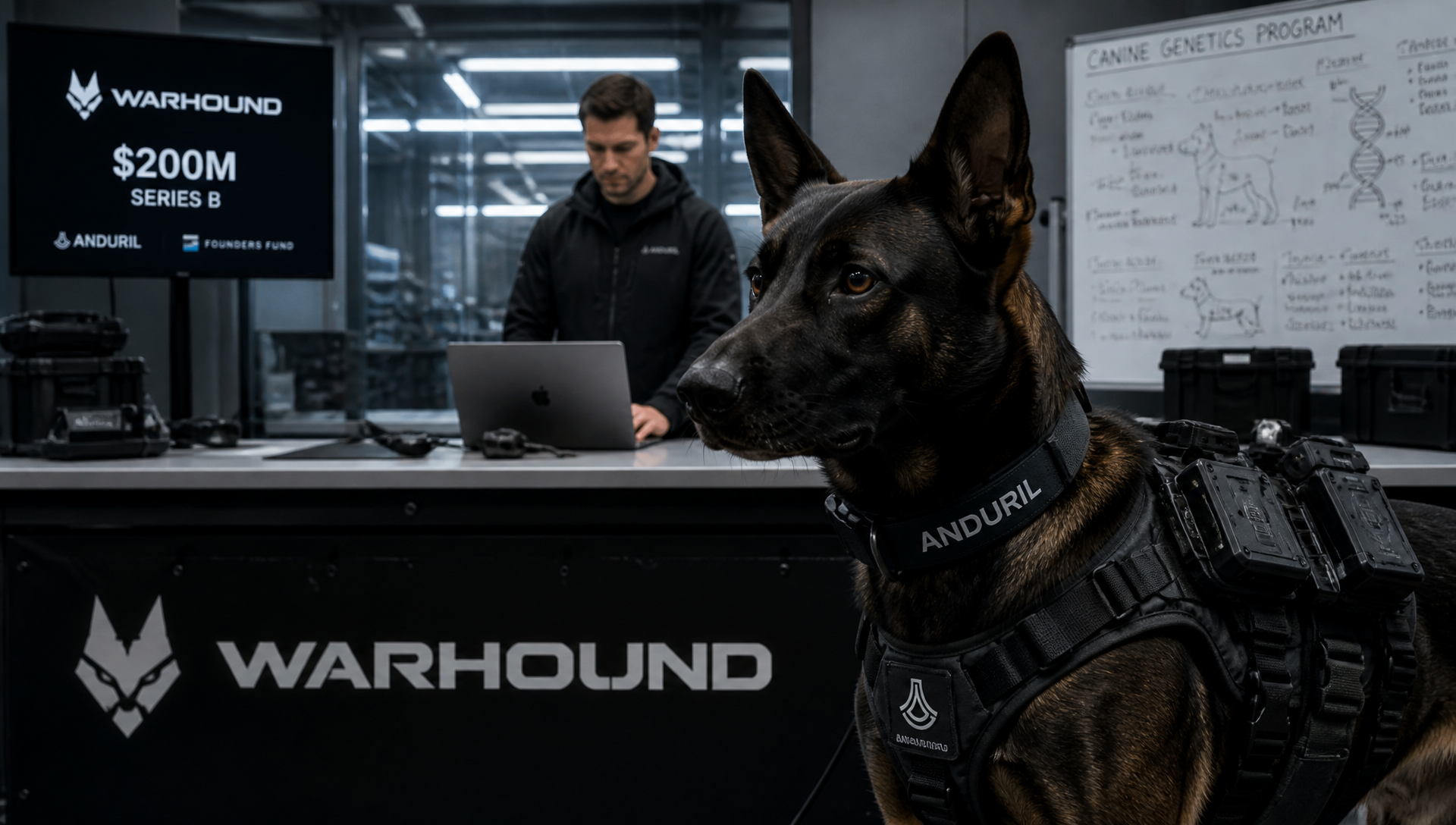
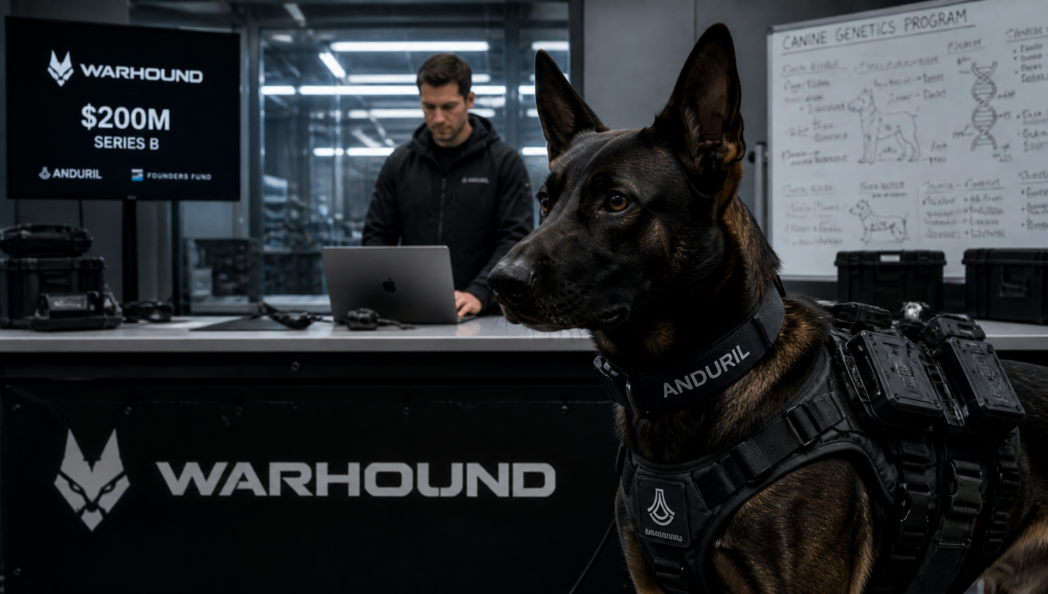
The news broke in late October 2026. A new company called Warhound came out of stealth mode with a giant $200 million seed round. Its plan is to engineer war dogs: clone elite working dogs, edit their genes, and equip them with gear from Anduril. The idea has already set the internet on fire. Some people are thrilled. Others are horrified.
Let’s dig into what is true, what is hype, and why everyone is talking about it.
What Is Warhound, and Why Is Everyone Talking About It?
Warhound is a new defense technology company based in Texas. It was dreamed up by Ben Lamm, the cofounder of Colossal Biosciences. Colossal is the company famous for its “de-extinction” work on animals like woolly mammoths and dodos. Warhound was also born out of conversations with Palmer Luckey, the founder of Anduril, a major defense-tech company. (TechCrunch)
The company says its mission is to “rebuild America’s domestic supply” of elite working dogs. These are the dogs that help the military, police, and first responders. Warhound plans to mix together genetics, cloning, biobanking, training, animal care, and field technology from Anduril. (PR Newswire)
The company’s website calls the idea an “Advanced Canine Genetics and Cybernetic Platform.” Its slogan is “Proud to Serve. Built for Victory.” It says animal welfare is “central” to its mission. (Warhound)
In simple words, here is the plan: clone the best working dogs, edit their genes to improve health and performance, then give them protective and sensor-based gear from Anduril. TechCrunch reports the dogs would be used for jobs like finding bombs, searching for people, and other dangerous tasks.
The Big Money Behind the War Dogs
Let’s talk about the cash. Warhound’s launch round is described as a $200 million seed round at a $1.2 billion valuation. That is a huge number for a company that has no finished product yet.
The list of backers is long and impressive. It includes In-Q-Tel, Sequoia Capital, ARK Invest, Franklin Templeton, 8VC, USIT, Bob Nelsen, Breyer Capital, CAZ Investments, Neogenesis, Builders VC, Lux Capital, and others. (PR Newswire)
One name on that list really stands out: In-Q-Tel. This is the venture firm backed by the CIA and other U.S. intelligence agencies. TechCrunch points out that having In-Q-Tel on board makes this feel like more than a quirky biotech idea. It puts Warhound right in the middle of the national-security and defense-tech investing world.
If you are a startup founder reading this, there is a lesson hiding in here. Big rounds like this one often come from investors who already care deeply about a specific sector. Finding those investors, and reaching out to them in a way that feels personal, is half the battle of fundraising.
Meet the People Behind Warhound
Ben Lamm is the biotech brain of the project. He cofounded Colossal Biosciences, which is known for high-profile work on mammoths, dodos, and gene-edited wolf projects. Warhound uses biotechnology licensed from Colossal, and Colossal owns a stake in the new company. (TechCrunch)
Palmer Luckey is the defense-tech side of the story. He founded Anduril, and the idea for Warhound came out of his chats with Lamm. But here is an important twist. Multiple reports say Luckey is not an owner of Warhound. He has no equity and is not involved in the day-to-day running of the company. Anduril also reportedly does not hold equity. (TechCrunch)
The CEO is David Spirk. According to Warhound’s announcement, he is a U.S. Marine Corps veteran. He is also a former senior intelligence and Defense Department data official. He served as the first chief data officer for the Department of War/Defense, as chief data officer for USSOCOM, and most recently as a senior counselor at Palantir. (PR Newswire)
How Would Warhound Actually Build These Dogs?
Warhound’s plan has several steps. Think of it like an assembly line, but for dogs.
- Find the best dogs. The company will look for top-performing working dogs. Reporting says the main breeds are Belgian Malinois, German Shepherds, and Labradors.
- Collect cells and blood. Samples from elite dogs get stored in a biobank.
- Clone the stars. Selected dogs would be cloned using technology tied to ViaGen, a cloning company owned by Colossal.
- Edit the genes. Embryos or cell lines would be gene-edited to reduce inherited health problems and, later, to improve performance.
- Train the dogs. The animals would be trained for military, police, and first-responder missions.
- Equip them with Anduril gear. The dogs would get protection, situational awareness tools, and ways to share data with their handlers.
What would the gene editing actually do? Warhound says it will focus on health first. That means trying to lower the risk of problems like hip dysplasia, poor eyesight, cancer, and muscle loss. Only after that would it move toward performance traits like speed, agility, endurance, or a better sense of smell. WIRED reports that Lamm even floated a future idea of using wolf scent-receptor genes to boost a dog’s sniffing power. That sounds like a later dream, not something that exists today.
“Arming Them With Anduril Gear”: What Does That Really Mean?
This is the part of the story that makes people’s jaws drop. The phrase “arming them with Anduril gear” sounds like dogs carrying weapons. But that is not what the reporting says.
Current coverage points to protective and sensor gear, not guns on dogs. Anduril’s role is described as providing software and hardware. This includes protective vests, goggles, eye and ear protection, sensors, and battlefield awareness tools that could send information back to handlers. (TechCrunch)
Warhound’s own announcement says dog-and-handler teams will connect with Anduril tools, including eye and ear protection and Eagle Eye technology, to make missions safer and more effective. Forbes described one piece of the plan as a canine companion to Anduril’s Eagle Eye mixed-reality helmet.
So are these cyborg dogs? Not exactly. WIRED asked about the “cybernetic Augments” wording on Warhound’s site. Lamm explained that the plan is not to put computers inside the dogs. Instead, the company would supply tools like advanced body armor. That is more like wearable tech than a robot-dog hybrid. (WIRED)
Here is a simple way to remember it: equipped and protected, not armed with weapons.
Why Does Warhound Say This Is Needed?
Warhound’s pitch rests on two big claims.
The first claim is that the United States depends too much on other countries, especially in Europe, for its military working dogs. The company says more than 80% of U.S. military working dogs come from Europe. The second claim is that the process wastes a lot of time and money. After about three years of buying and training, fewer than half of the dogs end up fit for service. Warhound says that means about 200 dogs must be sourced and trained to field 100 working animals. (PR Newswire)
Warhound is not the only one saying this. The American Kennel Club’s Detection Dog Task Force says the U.S. government buys 80% to 90% of its working dogs from Europe. It also says domestic sources are not big enough to meet government needs.
The official training system already exists too. At Joint Base San Antonio-Lackland, the Air Force’s 341st Training Squadron trains military working dogs for the Department of Defense and other agencies. They learn patrol work, drug detection, explosive detection, and other special missions.
Do These Dogs Exist Yet? Not Quite.
This is the big reality check. Warhound is still in the pre-deployment stage. The dogs you are imagining are not out in the field today.
TechCrunch reported that the first batch of dogs was “about to be cloned and incubated.” Births are expected in early 2027. The hope is to have dogs in service about two years after that. WIRED reported something similar: Warhound had collected blood samples from top working dogs and expected its first puppies in early 2027. (TechCrunch)
Here is what Warhound has not shown yet, based on the materials found:
- Finished dogs
- Performance data
- The specific genes it plans to edit
- A price per dog
- A signed government contract
TechCrunch reported that Warhound does not yet know how much it will charge. It expects to sell to first responders, the Department of Defense, military service groups, and police forces. Lamm said the company has briefed many government groups. (TechCrunch)
What About Animal Welfare?
Warhound says it takes animal welfare seriously. The company says it will work under guidance from the American Humane Society. That group will certify training programs and help with adoption plans for retired military working dogs. (PR Newswire)
American Humane’s president and CEO, Robin Ganzert, is quoted in the announcement. She says working dogs deserve welfare promises that match their service. That includes care during training, active duty, and retirement. TechCrunch also reported that American Humane said it welcomed “a seat at the table” to help make sure the dogs are treated humanely. (PR Newswire)
But critics say that is not enough. They argue that certifying training and supporting retirement does not answer the hardest questions. Those include what happens with cloning, gene editing, failed embryos, surrogate mothers, and dogs that do not meet the standards. PETA called the plan “outdated and out of touch.” The group argues that robots and AI should replace dogs in dangerous jobs instead of creating engineered military animals.
The Controversy: Why People Are Angry
This story has everything that makes the internet go wild: dogs, genetic engineering, war, defense tech, and big Silicon Valley names. Let’s look at the main complaints.
Animal-Rights Outrage
PETA says it is backward to genetically engineer dogs for dangerous military work when robot dogs and other tech can do similar jobs without risking living animals. The group points to harms like dogs being shot, blown up, strangled, or dying from heatstroke. (PETA)
Other critics quoted by Daily Caller News Foundation and Independent Journal Review warned about side effects. Engineering traits like extra alertness or sensitive senses could cause more anxiety, long-term stress, or PTSD-like problems. Boosting muscle or stamina could also strain a dog’s bones and heart.
Cloning and Gene-Editing Worries
The FDA’s general animal-cloning materials say cloning can involve surrogate mothers. They also note that in some species, cloned animals have had higher rates of bad health outcomes. For example, the FDA says cloning in cattle and sheep has been linked to a greater risk of health problems for surrogate mothers and very young clones.
Groups like the ASPCA and BSAVA have wider concerns about cloning pets. They worry about the welfare of cloned animals and their surrogate mothers. They also say there is little evidence about long-term health.
The “Dystopian” Headlines
Media coverage has leaned into how strange the story feels. WIRED described the startup as making genetically modified military dogs with advanced body armor. It quoted a comparison to a “Captain America dog program with Iron Man tech.” Defector published a very critical essay. It argued that the dogs do not exist yet, that cloning has welfare problems, and that the pitch turns animals into military hardware.
Can It Even Work?
Some critics doubt the science. Producing healthier dogs is not as simple as editing a few genes. Things like trainability, aggression control, scent skill, anxiety, drive, and endurance are probably shaped by many factors. Genes, early life, training, and the bond with a handler all play a part. Defector argued that if wiping out cancer or hip dysplasia in purebred dogs were easy, vets would have done it already.
What About the Rules?
Warhound’s plan raises questions about regulation. Reporting did not find a clear public path made just for gene-edited military dogs.
The FDA does oversee intentional genomic alterations in animals. That means changes to an animal’s DNA made with modern tools like genome editing. FDA guidance describes a risk-based approach to overseeing these changes when they can be passed to future generations.
But several things are still unclear from public reporting:
- Would Warhound’s dogs need FDA review as gene-edited animals?
- Does national-security or military use change the process?
- What oversight would apply to cloning, surrogate mothers, and training facilities?
- Would military-specific review apply before the dogs are deployed?
Fact-Check: What’s True and What’s Hype?
With a story this wild, it helps to separate fact from fiction. Here is a quick guide.
- “They’re engineering war dogs now.” Mostly true as a plan. Warhound is funded to clone and gene-edit working dogs, but deployable engineered dogs do not exist yet. (TechCrunch)
- “They raised $200M.” True, according to multiple reports and Warhound’s own announcement. (PR Newswire)
- “Anduril is arming them.” Potentially misleading. Reporting points to protective gear, sensors, and awareness tools, not lethal weapons on dogs. (TechCrunch)
- “The dogs will be cyborgs.” Overstated. Lamm told WIRED the plan is external gear like body armor, not computers inside the dogs. (WIRED)
- “Palmer Luckey owns Warhound.” No, based on current reporting. He helped come up with the idea but reportedly has no equity and no day-to-day role. Anduril reportedly has no equity either. (TechCrunch)
- “This is already deployed with the military.” No evidence found. The first puppies are expected in 2027, and service is hoped for about two years after that. (TechCrunch)
- “Animal-rights groups are outraged.” Yes. PETA and other critics have condemned the plan on welfare and ethics grounds. (PETA)
Why This Story Went Viral
There are a few reasons this news spread so fast.
- It sounds like sci-fi. “Genetically engineered war dogs” feels like Black Mirror or a video game plot.
- People love dogs. Mixing dogs with war and genetic engineering creates instant strong feelings.
- The big names matter. Palmer Luckey and Anduril are famous and divisive symbols of Silicon Valley’s link to the military.
- Colossal’s brand is already buzzy. The de-extinction company already attracts both fascination and doubt.
- The tech crossover is spooky. Anduril gear plus “cybernetic Augments” language makes it feel like animals and machines teaming up for war.
- The two sides clash. The company says it will make safer, healthier dogs. Critics say it will turn living animals into weapons systems.
What to Watch Next
This story is far from over. Here are the big questions to keep an eye on:
- Will the first puppies arrive in early 2027?
- Which genes will actually be edited?
- Will the edits only improve health, or will they boost performance too?
- What will cloning success rates look like, and how will surrogate mothers and puppies fare?
- Who will check animal welfare beyond training certification?
- Will Warhound win a real contract from the Pentagon, police, or first responders?
- How much will each dog cost?
- Will the FDA or another regulator review the gene-edited animals?
- What happens to dogs that fail training or do not show the traits the company wants?
- Will Anduril’s gear stay focused on protection and sensing, or move toward more controversial uses?
The Bottom Line
Here is the honest summary. Warhound is real. The $200 million is real. The link to Anduril and Colossal is real. And the controversy is very real.
But the “genetically engineered war dogs” are not out in the field yet. The most dramatic versions of the story, like cyborg dogs, armed dogs, and super-soldier dogs, go beyond what anyone has shown so far.
The most accurate way to say it is this: a heavily funded defense-biotech startup wants to clone and gene-edit elite working dogs, then outfit them with Anduril protective and sensor gear for military and law-enforcement missions. Supporters say it could create healthier, safer working dogs and cut the country’s reliance on foreign breeders. Critics say it is a dystopian attempt to turn living animals into military hardware.
Whichever side you land on, one thing is clear. Big, bold ideas attract big money and big attention. For founders chasing their own funding, the Warhound story shows how much power the right investors, and the right story, can have. At HeyEveryone.io, we help founders get their story in front of the right investors with personalized outreach, so great ideas don’t get lost in a crowded inbox.
Written for HeyEveryone.io on behalf of founder Nikita Blanc.
Frequently Asked Questions
What is Warhound?
Warhound is a Texas-based defense technology startup, founded by Colossal Biosciences cofounder Ben Lamm. It plans to clone and gene-edit elite working dogs and equip them with Anduril protective and sensor gear for military, police, and first-responder missions.
How much money did Warhound raise?
Warhound raised a $200 million seed round at a $1.2 billion valuation. Backers include In-Q-Tel, Sequoia Capital, ARK Invest, Franklin Templeton, 8VC, Lux Capital, and others.
Are the dogs armed with weapons?
No. Current reporting points to protective vests, goggles, eye and ear protection, sensors, and awareness tools that share data with handlers. There is no evidence of weapons mounted on the dogs.
Are Warhound’s dogs cyborgs?
No. Ben Lamm told WIRED the plan is not to place computers inside the dogs. The company would supply external equipment such as advanced body armor.
Does Palmer Luckey own Warhound?
No, according to current reporting. Luckey helped inspire the idea but reportedly holds no equity and has no day-to-day role. Anduril also reportedly has no equity in the company.
When will the dogs be ready for service?
The first puppies are expected in early 2027, and the company hopes to have dogs in service about two years after that. No finished dogs, performance data, or government contracts have been shown yet.
Why are animal-rights groups opposed to the plan?
Groups like PETA argue that robots and AI should replace dogs in dangerous jobs rather than engineering new military animals. Critics also raise concerns about cloning, surrogate mothers, gene-editing side effects, and what happens to dogs that fail to meet standards.
Will the FDA regulate gene-edited military dogs?
It is unclear. The FDA oversees intentional genomic alterations in animals, but public reporting has not clarified whether Warhound’s dogs would require FDA review or how national-security use might change the process.