
Estimated reading time: 9 minutes
Key Takeaways
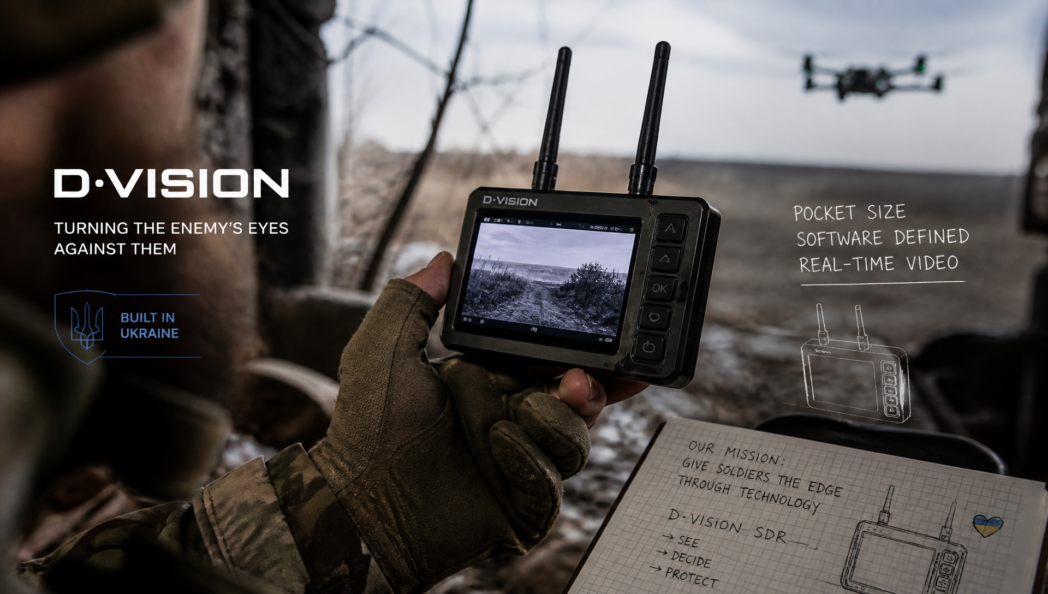
- The D·Vision SDR is a pocket-sized, passive drone detector built by Kyiv startup CODE380.
- It does not literally blind drones. It intercepts and displays unencrypted analog video feeds from some Russian drones.
- It weighs only about 290 g, scans 500 MHz to 8.7 GHz, and covers the 4.1-4.5 GHz band used by newer Molniya drones.
- Encrypted digital video, fiber-optic drones, and AI-guided drones can limit or bypass it.
- CODE380 was founded only months before the reports, with a core development team of just four people.
Table of contents
- Wait, Did Ukraine Really “Blind” Russian Drones?
- Meet the D·Vision SDR and the Startup Behind It
- How Does It Work? (In Plain English)
- What the Device Can and Cannot Do
- The Tech Specs: Small, Light, and Powerful
- Why This Matters on the Battlefield
- The Molniya Drone Twist
- How Does It Compare to Other Ukrainian Drone Detectors?
- A Tiny Startup With a Big Story
- The Weak Spots: Where the Gadget Could Struggle
- Timeline: How the Story Unfolded
- Why Did This Story Go Viral?
- So, Is the “Blind Russian Drones” Headline Accurate?
- The Big Picture
- What Startup Founders Can Learn From This Story
- About HeyEveryone.io
- Final Thoughts
- Frequently Asked Questions
Imagine you are a soldier hiding in a trench. A small drone buzzes somewhere above. You cannot see it. You cannot hear it well. But you have a tiny gadget in your hand, and on its screen, you can see exactly what the drone sees. You can see the target. You can see where it is heading. And you can see it coming for you.
That is not a scene from a spy movie. It is real. Ukraine’s pocket-sized gadget turns Russian drones’ cameras against them, and the story has taken the tech and defense world by storm. The device is called the D·Vision SDR, and it was built by a small startup from Kyiv. Let’s dig into how it works, why it matters, and what its limits are.
Wait, Did Ukraine Really “Blind” Russian Drones?
You may have seen a viral headline saying Ukraine built a pocket device that can “blind” Russian drones. It sounds amazing. But the truth is a little different, and it is just as exciting.
The device does not literally blind the drone. It does not break the drone’s camera. It does not appear to jam the drone or take control of it. Instead, it does something sneaky and smart. It intercepts and displays live, unencrypted analog video feeds from some Russian drones. That means Ukrainian troops can watch the same video the enemy drone pilot is watching.
So the better way to say it is this: Ukraine built a pocket-sized device that lets troops see through Russian drones’ eyes. The drone’s own camera is used against it. The metaphor “turns Russian drones’ cameras against them” fits very well. The word “blinds” is much shakier.
Meet the D·Vision SDR and the Startup Behind It
The device is called D·Vision SDR. It was built by CODE380, a Kyiv-based communications-equipment startup. It is a small, passive, handheld drone detector and radio-frequency analyzer, as dev.ua reports.
Here is the big idea. Older drone detectors mostly just beep or flash a light when a drone is nearby. The D·Vision SDR goes much further. If the drone is sending out a compatible, unencrypted analog video feed, the device can show that live video on its screen. UNITED24, dev.ua, Defense News, TechRadar, and TechCrunch all reported the same central claim: the receiver can reveal what some Russian drones are seeing in real time.
How Does It Work? (In Plain English)
Let’s make this simple.
Many small attack drones, like FPV drones, send a live camera picture from the drone back to the pilot using radio waves. If that picture is analog and not encrypted, then anyone with the right receiver, tuned to the right signal, can watch it too. It is a bit like a walkie-talkie conversation that anyone with the right radio can listen to.
The D·Vision SDR does this job automatically. It scans for likely drone signals, picks out the ones it can read, and shows the video when it can.
What does “SDR” mean?
The “SDR” in the name stands for software-defined radio. Older radio gear is built to listen to only a few fixed signals. A software-defined radio turns radio signals into digital data and studies them using software. That means the device can be changed through software updates when Russian drones change their frequencies or signatures. No new hardware is needed each time.
What the Device Can and Cannot Do
What the device can do
Here is what the D·Vision SDR is built to do, according to Defense News:
- Listen quietly. It is passive, so it does not send out signals of its own.
- Scan a wide range of frequencies for signals linked to drones.
- Show compatible analog video feeds from drones that send video without encryption.
- Help troops guess a drone’s direction, target, and timing before it strikes.
- Get updated through software or firmware as the enemy changes its drones’ frequencies and signatures.
What the device cannot do
It is just as important to know the limits. The D·Vision SDR does not:
- Literally “blind” the drone.
- Appear to hack the camera sensor itself.
- Necessarily jam, spoof, or take over the drone.
- Decode every digital or encrypted drone feed.
- Help much against fiber-optic drones, or drones flying without any radio or video signals.
So it is a clever tool, not a magic shield.
The Tech Specs: Small, Light, and Powerful
The reported specs vary a little between news outlets, but the main points are consistent. They come from manufacturer documentation and reporting by Militarnyi, Defense News, dev.ua, and the D·Vision product and manual pages found online. Here is what has been reported:
| Feature | Reported detail |
|---|---|
| Frequency scan range | 500 MHz to 8.7 GHz |
| Weight | About 290 g (roughly 10 oz), without antennas |
| Analog video range | Up to about 10 km on 540 MHz-6 GHz in good conditions; about 3.5-5 km at higher bands |
| Video standards | PAL / NTSC analog video; can detect certain DJI Mavic-compatible digital signals but cannot decode DJI digital video |
| Battery life | Depends on the version: roughly up to 3 hours or up to 6 hours |
| Size | About 130 × 80 × 22 mm |
| Antenna inputs | 2 × SMA, with omnidirectional antennas included |
| Storage | microSD support, reportedly up to 512 GB |
| Other features | Waterfall spectrum display, EW testing mode, targeted frequency monitoring, remote monitoring, firmware updates |
Real-world results depend on many things: terrain, how high the drone is flying, how strong its transmitter is, interference, antenna placement, and whether the drone uses compatible analog video, as Defense News notes.
At only about 290 grams, it is light enough for a soldier to carry all day without trouble. That is a big part of the story.
Why This Matters on the Battlefield
The big win here is early warning plus situational awareness. If a Ukrainian unit can see the enemy drone’s camera feed, they may be able to work out:
- Whether the drone is still searching or has already locked onto them.
- Which direction it is coming from.
- What object or trench line the Russian pilot is aiming at.
- Whether they should scatter, hide, turn on jammers, or warn nearby units.
In a drone-heavy fight, a few seconds of warning can change everything.
Defense News describes the D·Vision SDR as part of a wider Ukrainian toolkit of cheap, passive drone sensors that listen without sending out a signal. That matters a lot. Active signals can reveal where a soldier or an electronic warfare team is hiding. A passive listener stays quiet and stays safe.
The Molniya Drone Twist
Here is a detail that made experts sit up. The D·Vision SDR covers the 4.1-4.5 GHz band. That range became important after newer Russian Molniya strike drones began using it for video transmission in June 2026.
Ukrainian radio specialist Serhii “Flash” Beskrestnov warned that many detectors either cannot see those frequencies or see them poorly. That can create dangerous false confidence. A soldier might think no drone is nearby when one actually is, according to Defense News.
This is one big reason the D·Vision SDR got so much attention. It is not just another drone alarm. It reportedly covers newer, non-standard bands that Russian drones are using, and it is light enough for frontline teams to carry.
How Does It Compare to Other Ukrainian Drone Detectors?
The D·Vision SDR is not the first Ukrainian detector that can intercept analog drone video. Defense News compared it with several other homegrown systems:
| System | Reported weight | Reported frequency coverage |
|---|---|---|
| D·Vision SDR | ~290 g / 10 oz | 500 MHz-8.7 GHz |
| Babai Vydun 7.5 | ~0.9 kg / 2 lb | up to 7.5 GHz |
| Contra-drone SENSE-4 | ~600 g / 21 oz | up to 8.2 GHz |
| BlueBird Tech Chuyka 3.0 | up to ~650 g / 23 oz | upgradeable to 8.8 GHz |
What makes the D·Vision SDR stand out is the mix of low weight, wide scan range, software-defined design, and live analog-video display, per Defense News.
A Tiny Startup With a Big Story
Here is a fun part of the story, and one that startup fans will love. According to dev.ua and UNITED24’s summaries of reporting by the Ukrainian tech outlet DOU, CODE380 was founded only about three months before the October 2026 reports. But work on the D·Vision SDR detector started roughly a year and a half earlier.
The core development team reportedly had just four people. CODE380 itself had eight employees, plus six more specialists who helped with testing and design.
The device was reportedly field tested with Ukrainian military personnel during combat missions, and feedback from the frontline was used to improve the product. The team also reportedly releases software updates about twice a month. That speed matters a lot, because drone frequencies and tactics change fast in Ukraine’s electronic-warfare environment.
It is a classic David-versus-Goliath tale: a small, young team building clever technology that could help protect people on the front line.
The Weak Spots: Where the Gadget Could Struggle
Now for the honest part. The D·Vision SDR only works when the enemy drone gives off a signal it can read. Several changes on the battlefield could weaken its power.
1. Encrypted or digital video feeds
If Russian drones switch from analog to encrypted digital video, passive analog receivers like the D·Vision SDR may no longer be able to show the feed. Beskrestnov has warned that digital video could one day replace analog, which would make many portable analog receivers and fixed analog receiving stations far less useful.
2. Fiber-optic drones
Fiber-optic FPV drones are steered through a thin physical cable instead of radio waves. That makes them very hard for radio-frequency detectors to find. Defense News notes that many receivers struggle with fiber-optic drones.
3. AI-guided and autonomous drones
The New York Times reported in August 2026 that Ukrainian officials had found Russian AI-guided drones using Nvidia Jetson components. Some of these systems use AI in the final phase of an attack to cut down their weakness to jamming. Drones like these may give off little or no useful control or video signal for a passive receiver to catch.
4. False confidence
Beskrestnov’s warning is worth repeating. If troops assume a detector sees every threat, they could be caught off guard by drones using unsupported, weakly detected, encrypted, or non-radio guidance methods. A tool is only as good as the way people understand it.
Timeline: How the Story Unfolded
Here is how the news spread, step by step:
- June 2026: Serhii “Flash” Beskrestnov warns that Russian Molniya drones use video frequencies around 4.1-4.5 GHz that many detectors miss or detect poorly.
- Oct. 17, 2026: Ukrainian tech outlet DOU reports on D·Vision SDR, according to later summaries by dev.ua and UNITED24.
- Oct. 18-19, 2026: dev.ua, UNITED24 Media, and Militarnyi publish early coverage describing the device, its SDR design, and its technical abilities.
- Oct. 25, 2026: TechRadar publishes a wider explainer, framing it as a detector that lets soldiers see what Russian drones see.
- Nov. 2, 2026: Defense News publishes a detailed English-language report from Kyiv. It compares D·Vision SDR with other Ukrainian receivers and highlights its low weight and Molniya-frequency coverage.
- Nov. 2-4, 2026: TechCrunch, RBC-Ukraine, Mint, ExtremeTech/Yahoo, and other outlets spread the story with more viral-style framing.
Why Did This Story Go Viral?
This story has almost everything that makes people click and share:
- David-versus-Goliath energy. A small Ukrainian startup builds a pocket gadget to take on a much bigger threat.
- A “wait, that’s possible?” moment. Soldiers can watch what the enemy drone sees.
- Spy-tech appeal. It sounds like battlefield hacking, even though it is closer to passive signal interception.
- Drones, AI, and war. These are all topics that grab huge attention right now.
- A simple, powerful picture. “Turning the drone’s own eyes against it” is easy to understand and easy to share.
- Clear stakes. A few seconds of warning can matter a lot when drones fill the sky.
So, Is the “Blind Russian Drones” Headline Accurate?
Let’s be fair and clear. The proposed viral title, “Ukraine Just Built a Pocket Device That Can Blind Russian Drones,” is partly misleading.
The device does not blind drones by disabling their cameras or jamming their vision. It intercepts and shows compatible unencrypted analog video feeds. Better headlines might be:
- “Ukraine Built a Pocket Device That Lets Troops See Through Russian Drones”
- “Ukraine’s Pocket Drone Detector Turns Russian Camera Feeds Into Early Warnings”
- “This Ukrainian Gadget Lets Soldiers Watch What Russian Drones Are Seeing”
- “Ukraine’s Tiny Receiver Turns Some Russian Drones Into Unwitting Scouts”
The phrase “turns Russian drones’ cameras against them” is strong and fair, as seen in the TechCrunch coverage. “Blinds Russian drones” promises more than the device delivers.
The Big Picture
Here is the simplest way to explain it. Ukraine’s D·Vision SDR is a pocket-sized drone detector. It picks up some Russian drones’ unencrypted video signals and shows the feed to Ukrainian troops. Instead of knocking the drone out of the sky, it lets defenders see what the drone sees. That could give them enough warning to take cover, jam the drone, or understand where it is headed.
The catch is that it works best against compatible analog video feeds. Encrypted digital drones, fiber-optic drones, and autonomous drones can limit or bypass it.
It is a passive detection and video-interception tool. It is not a guaranteed shield. Its strength is highest against unencrypted analog-video drones, including some Russian systems using frequencies that older detectors miss. Its weakness is the future battlefield, where encrypted digital video, fiber-optic control, and AI-guided drones may reduce or remove the signals it depends on.
What Startup Founders Can Learn From This Story
Even though this is a story about defense technology, there is a lesson here for anyone building a startup. CODE380 was only a few months old as a company. It had a tiny core team of four developers. Yet it built something that is now covered by Defense News, TechRadar, and TechCrunch.
How did that happen? A few things stand out:
- They solved a real, urgent problem. Drone threats are deadly, and soldiers needed better warning.
- They tested in the real world. Field testing with military personnel shaped the product.
- They updated fast. Software updates about twice a month kept the device useful as the enemy changed tactics.
- They told a story people could grasp. “See what the drone sees” is clear, bold, and memorable.
Great ideas from small teams can catch the world’s attention. But great ideas also need to reach the right people. That is true for a battlefield gadget, and it is true for any startup raising money.
About HeyEveryone.io
This blog is brought to you by HeyEveryone.io, founded by Nikita Blanc. Stories like CODE380’s remind us that small, fast-moving teams can do amazing things, but they still need to get in front of the right people to grow.
For startup founders, that often means reaching investors. Traditionally, founders have spent upwards of six months manually researching investors and writing cold emails, often with low response rates because the outreach feels impersonal and irrelevant. HeyEveryone offers an AI-driven solution that automates investor outreach. It finds investors who match a startup’s sector, stage, and goals, gets their contact information, and writes personalized emails based on data points like their social activity, news mentions, and past investment behavior.
The platform sends the outreach campaign for you, with two weekly follow-ups. HeyEveryone reports a 15-20% reply rate and a 2-3% meeting booking rate, which is about 10x higher than industry averages for cold outreach. The pricing is founder-friendly: $2 per investor reached, which includes the first email and two follow-ups. That way, founders can spend less time on outreach and more time doing what they do best – building their businesses.
Final Thoughts
Ukraine’s D·Vision SDR is a gripping example of how small teams and smart ideas can make a big impact. It does not blind Russian drones, but it does something just as interesting. It quietly listens, picks up some drones’ own video feeds, and turns them into early warnings for the people on the ground. A gadget that weighs about as much as a small water bottle can now show soldiers what the enemy sees.
At the same time, the story is a reminder that technology races never stand still. As drones move toward encryption, fiber optics, and AI guidance, tools like the D·Vision SDR will need to keep changing, and the Ukrainian team behind it seems ready to keep updating. For now, one thing is clear: Ukraine’s pocket-sized gadget turns Russian drones’ cameras against them, and the world is watching.
Frequently Asked Questions
What is the D·Vision SDR?
The D·Vision SDR is a small, passive, handheld drone detector and radio-frequency analyzer built by Kyiv-based startup CODE380. It scans for drone signals and can display live, unencrypted analog video feeds from compatible drones, as dev.ua reports.
Does the device actually blind Russian drones?
No. The device does not disable a drone’s camera or jam its vision. It intercepts and displays compatible analog video feeds, letting troops see what the drone sees. The phrase “turns the drone’s camera against it” is more accurate than “blinds.”
What does SDR stand for?
SDR stands for software-defined radio. It converts radio signals into digital data and analyzes them with software, which means the device can be updated to adapt to new drone frequencies and signatures without new hardware.
How much does the D·Vision SDR weigh?
It weighs about 290 grams (roughly 10 oz) without antennas, making it much lighter than several competing Ukrainian detectors, according to Defense News.
Can it detect fiber-optic drones?
Not well. Fiber-optic drones are controlled through a physical cable rather than radio waves, so many radio-frequency receivers struggle to detect them.
Why does the 4.1-4.5 GHz band matter?
Newer Russian Molniya strike drones began using this band for video transmission in June 2026. Many detectors cannot see it or see it poorly, which can create dangerous false confidence. The D·Vision SDR reportedly covers this band.
Who built the D·Vision SDR?
It was built by CODE380, a Kyiv-based communications-equipment startup. The core development team reportedly had just four people, and the company was founded only about three months before the October 2026 reports, per dev.ua.
What are the biggest weaknesses of the device?
It depends on drones giving off a readable signal. Encrypted digital video, fiber-optic control, and AI-guided autonomous drones can limit or bypass it, and over-reliance on any single detector can create false confidence among troops.
Raising right now?
HeyEveryone matches your startup with investors who fund your stage, sector and country, then writes a personal email to each one. Your top 10 matches are free.
See your top 10 investors