
Estimated reading time: 12 minutes
Key Takeaways
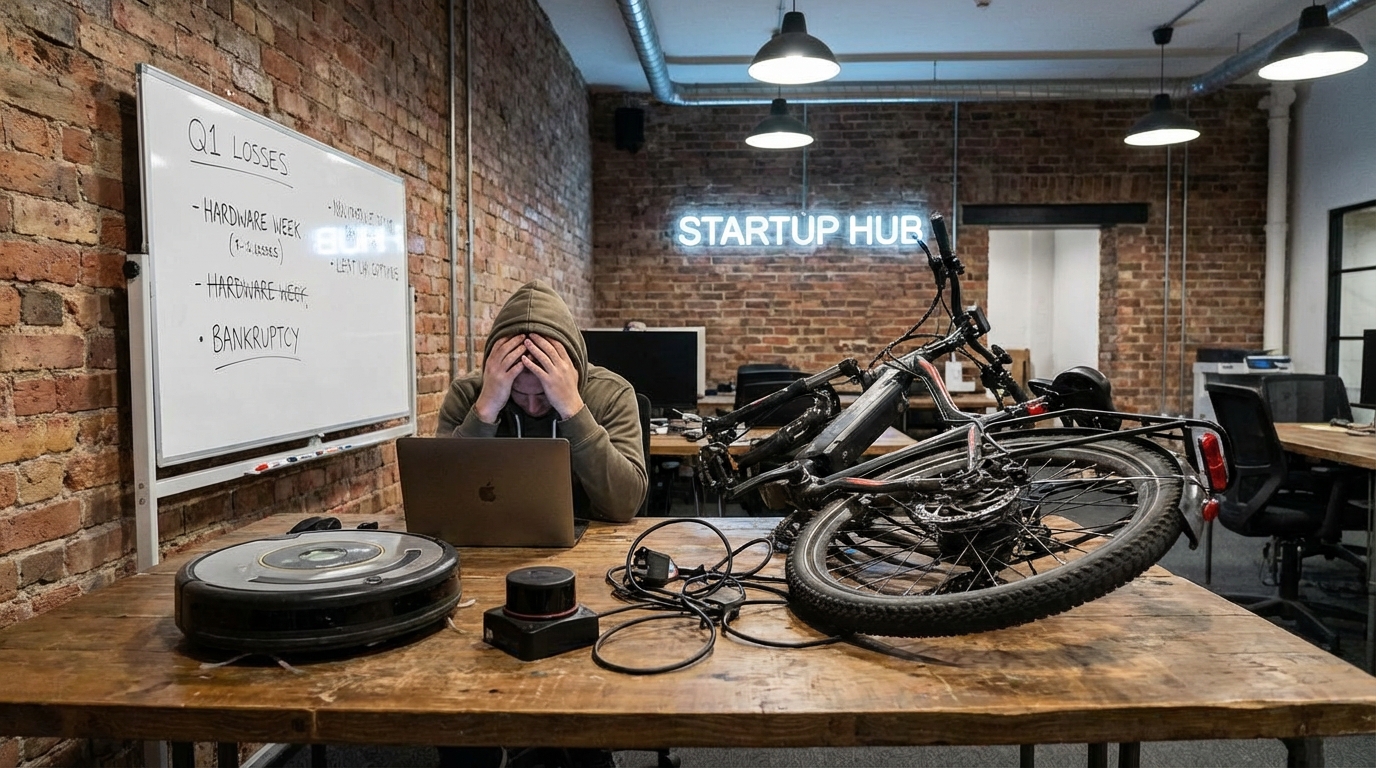
- Three major hardware companies—iRobot, Luminar, and Rad Power Bikes—filed for Chapter 11 bankruptcy within the same week.
- iRobot, maker of the famous Roomba, will be acquired by Chinese manufacturer Picea Robotics, wiping out existing shareholders.
- Luminar, a leader in autonomous vehicle lidar technology, is selling off its assets after losing its biggest customer, Volvo.
- Rad Power Bikes faces a rapid sale process after demand collapsed post-pandemic, leaving them with $72.8 million in debt.
- Common factors include the pandemic hangover, intense Chinese competition, rising tariffs, and the challenges of capital-intensive hardware manufacturing.
- This brutal week signals a major reset and consolidation in the consumer hardware industry.
Table of contents
- What actually happened in this “brutal hardware week”?
- iRobot: From creating a category to a bankruptcy sale
- Luminar: The lidar star fades out
- Rad Power Bikes: The pandemic darling crashes
- Is this a “collapse of consumer hardware startups”?
- What this means for the future of startups
- The Bottom Line
- Frequently Asked Questions
If you have walked into a home in the last ten years, you have probably seen a round robot vacuum humming across the floor. If you live in a city, you have likely dodged a thick-tired electric bike zipping down the street. And if you follow self-driving cars, you have heard of the laser sensors that make them see.
But this week, the companies behind these famous inventions hit a massive wall. Three major giants of the tech world filed for Chapter 11 bankruptcy protection, all within roughly the same small window of time. This isn’t just bad luck—it is a massive signal that the world of making physical things is going through a scary change.
For startup founders, investors, and anyone interested in venture capital, this is the biggest news story of the year. We are going to dig deep into what happened, why the makers of the Roomba, the top lidar sensors, and the most popular e-bikes all ran out of money at the same time.
What actually happened in this “brutal hardware week”?
Imagine three of the smartest kids in class failing the big test on the same day. That is what this week felt like for the tech industry. Three high-profile hardware companies hit Chapter 11 bankruptcy protection—a legal process that doesn’t always mean the company disappears instantly, but usually means they are pausing to reorganize their debts, sell parts of themselves, or find a new owner.
Here is the lineup of the crash:
- iRobot: The company that makes the Roomba, one of the most famous robot brands in America. They filed for a “pre-packaged” Chapter 11 bankruptcy, meaning they already have a plan to be bought by their manufacturer, a Chinese company called Picea Robotics.
- Luminar: A superstar in the world of autonomous driving that makes “lidar,” which uses lasers to help cars see. They filed for Chapter 11 and plan to sell almost all their assets in court because they ran into deep money trouble.
- Rad Power Bikes: The best-known brand in the U.S. for selling e-bikes directly to regular people. They also filed Chapter 11 and are now running a very fast sale process to find a buyer to keep the lights on.
These are not immediate liquidations where they turn off the servers and walk away. But for the people who own stock in these companies, the damage is huge.
iRobot: From creating a category to a bankruptcy sale
Let’s start with the most famous name on the list: iRobot.
The Rise of the Roomba
iRobot wasn’t just a startup; it was a legend. Founded in 1990 by roboticists from MIT (Massachusetts Institute of Technology), they launched the Roomba in 2002. Before that, robot vacuums were science fiction. iRobot made them real and essentially created the consumer robotics category.
At its peak during the pandemic, when everyone was stuck at home wanting clean floors, the company was valued at over $3 billion. Their revenues hit $1.56 billion in 2021. But then, things started to slide. By 2024, revenue dropped to about $682 million, and it went down even further in 2025.
The Fall
On December 14, 2025, the story took a sad turn. iRobot filed for Chapter 11 in Delaware. They agreed to a deal called a restructuring support agreement. Here is what that means:
- A Chinese manufacturer called Shenzhen Picea Robotics will take 100% ownership of the company.
- If you owned regular stock (shares) in iRobot, that value is wiped out. You get no recovery.
- iRobot will be taken off the Nasdaq stock exchange. It will become a private company owned by Picea. They expect this court process to be done by February 2026.
Why did the robot stop working?
How does a company worth $3 billion lose it all? There were four main reasons.
1. The Amazon Deal Failed
Amazon wanted to buy iRobot and agreed to pay between $1.4 billion and $1.7 billion. This would have saved iRobot. But in January 2024, Amazon walked away because regulators in the European Union said “no” due to competition worries. iRobot got a $94 million termination fee, but that wasn’t enough.
2. Fast Competitors from China
The founder of iRobot, Colin Angle, said their new main competitors were “Chinese fast followers”. Companies like Roborock, Ecovacs, and Dreame started making robots that were just as good, or sometimes better. These rivals were protected in their home market and had state support. They cut prices and innovated quickly, adding cool features like AI object detection and mops that clean themselves. iRobot couldn’t keep up.
3. Tariffs and Costs
It became very expensive to make Roombas. New U.S. tariffs on imports from Vietnam, where iRobot made its products, added about $23 million in costs in 2025. When you combine high taxes with competitors lowering their prices, your profit margins disappear.
4. Mistakes in Execution
The company also made some mistakes. They were slow to adopt new tech and had some product failures. By the third quarter of 2025, they had less than $25 million in cash left. By December, Picea controlled over $350 million of claims against iRobot. They had no choice but to sell.
Is my Roomba dead?
If you own a Roomba, don’t panic yet. Both iRobot and Picea have said that products, apps, warranties, and support will keep working. Operations will continue as normal. The CEO, Gary Cohen, said there are no app shutdowns planned, and new products are even coming in 2026.
So, “Roomba is dead” is an exaggeration. The brand lives on. But iRobot as an independent American company is gone.
Luminar: The lidar star fades out
Next up is Luminar. If you follow the news on self-driving cars, you know this name.
What is Luminar?
Luminar makes lidar sensors. Lidar stands for Light Detection and Ranging. It shoots lasers out to map the world in 3D. It is crucial for cars that drive themselves. Luminar went public in 2020 and was valued at over $3 billion. It was one of the most hyped startups in the car world.
The Bankruptcy Details
On December 15, 2025, Luminar filed for Chapter 11 in Texas. Their plan is sad but simple:
- Sell off the lidar business in court.
- They already agreed to sell their semiconductor subsidiary (the part that makes chips).
- Once everything is sold, the company will likely wind down and stop existing as a standalone business.
The filings show they have $100–500 million in assets, but they owe between $500 million and $1 billion. That is a lot of debt.
Why did Luminar collapse?
This is a classic story of relying too much on one big friend.
1. The Volvo Shock
Volvo, the car maker, was Luminar’s biggest customer and early supporter. But in November 2025, Volvo canceled a five-year-old contract with Luminar. This was a disaster. Luminar sued Volvo. Manufacturers who worked for Volvo also filed claims against Luminar. It became a messy legal fight.
2. Leadership Trouble
The company was also having internal issues. The Founder and CEO, Austin Russell, suddenly resigned as CEO in May 2025. This happened after an inquiry into the “code of business conduct and ethics.” After he left, the company had layoffs, the CFO left, and they even got sued for being evicted from an office.
3. The Market Changed
Austin Russell tried to save the company with his new venture, Russell AI Labs, but the stakeholders said no. The bigger problem is that the “autonomous vehicle wave” cooled off. Startups in this space promised a lot, but funding dried up as car makers slowed down their plans.
Luminar’s technology will likely survive under a new owner, but its dream of being a giant public company is over.
Rad Power Bikes: The pandemic darling crashes
The third piece of this brutal week is Rad Power Bikes.
Who are they?
Based in Seattle, Rad Power Bikes became the most famous electric bike brand in the U.S. during the pandemic. When gyms closed and buses felt scary, everyone bought an e-bike. Rad Power was the king of that moment.
The Slide into Trouble
But what goes up must come down. After the pandemic, demand dropped. The company had too much excess inventory (too many bikes sitting in warehouses) and not enough cash. They tried to fix it with layoffs and new CEOs. But on November 10, 2025, they warned employees that the company might shut down by early January 2026 if they didn’t find money.
On December 17, 2025, they officially filed for Chapter 11. They are now trying to sell the business within 45–60 days.
The Money Problem
The numbers look bad:
- Assets: $32.1 million.
- Liabilities (Debt): $72.8 million.
- Sales Drop: In 2023, they sold $129.8 million. In 2024, it was $103.8 million. In 2025, it dropped to $63.3 million.
One shocking detail is that they owe over $8.3 million to U.S. Customs for unpaid tariffs (taxes on imports).
What about the riders?
Rad Power says they will keep selling and servicing bikes while they look for a buyer. However, if they don’t find a good buyer, or if the new buyer only wants the brand name, spare parts and service centers could disappear. This is part of a bigger trend where many e-bike brands are struggling now that the “bike boom” is over.
Is this a “collapse of consumer hardware startups”?
When three giants fall in one week, it’s natural to ask: Is the whole industry collapsing?
The answer is complex. It’s not that people stopped buying things. It’s that the business of making things is incredibly hard right now.
The Common Patterns
If you look closely, iRobot, Luminar, and Rad Power all suffered from similar diseases:
1. It costs a lot to build things
Software is cheap to copy. Hardware is expensive. All three companies had to spend huge amounts of money on inventory, factories, and supply chains. When you have millions of dollars tied up in metal and plastic, you are vulnerable. If sales drop even a little bit, you can run out of cash fast.
2. The Pandemic Hangover
During 2020 and 2021, everyone bought gadgets. Companies thought this growth would last forever. They built too many factories (iRobot) and ordered too much stock (Rad Power). When the world went back to normal, they were left holding the bag.
3. Global Fights and Tariffs
This is a big lesson for startups. iRobot and Rad Power were crushed by Chinese competitors who could make things cheaper. At the same time, trade wars and tariffs made it more expensive for American companies to build products overseas.
4. The SPAC Bubble Burst
Luminar came from the “SPAC bubble.” This was a time when companies went public very easily with high valuations but not enough real profit. When interest rates went up, it became very hard to borrow money or raise new funds.
It’s a reset, not the end
This doesn’t mean everyday tech is dead:
- Robot vacuums are actually still popular! A Chinese company called Roborock now owns about 21% of the global market. iRobot just isn’t winning anymore.
- E-bikes are still growing in cities.
- Lidar is still needed for cars.
What we are seeing is a “reset and consolidation.” The weak companies are being bought or broken up, and the strong ones (often with better funding or lower costs) are taking over.
What this means for the future of startups
This “brutal week” teaches us five massive lessons about the future of technology and fundraising.
1. You need an ecosystem
Being a standalone hardware company is dangerous. Amazon wanted to buy iRobot because a vacuum is better when it’s part of a smart home system like Alexa. Without that support, iRobot was left alone in the cold. Integrated ecosystems win.
2. Competing with China is brutally hard
If your startup relies on manufacturing overseas, you are in a tough spot. Your suppliers might become your competitors (like Picea effectively taking over iRobot). American brands are struggling to match the speed and cost of Chinese factories.
3. Regulations can kill you
Startups often ignore politics, but they shouldn’t. iRobot died partly because of antitrust regulators stopping the Amazon deal. Rad Power is drowning in tariffs. Luminar faced regulatory investigations. Non-market forces like laws and taxes can tip a company into bankruptcy.
4. Forecasting is a trap
Forecasting demand for physical products is a nightmare. If you guess wrong about what people will buy in 18 months (like misreading the COVID surge), you end up with warehouses full of unsold gear. That mistake can kill a company years later.
5. For the consumer
For regular people, the short-term impact is small. Your Roomba still works. Your warranty is honored. But in the long term, resale values might drop, and parts might get harder to find as these brands get folded into larger companies.
The Bottom Line
Yes, the headline is true. Hardware’s brutal week: iRobot, Luminar, and Rad Power go bankrupt. It is a historic moment where three household names hit the wall at once.
No, this isn’t the end of gadgets. It is a reflection of a changing world. We are seeing the results of the post-pandemic hangover, intense global competition, and a tougher fundraising environment for capital-heavy businesses.
For founders, this week serves as a stark reminder: building hardware is one of the hardest games in town. It requires perfect timing, deep pockets, and a strategy that can survive both competitors and regulators.
The tech world will move on, and new startups will rise. But the ghosts of this brutal week will haunt the hardware industry for a long time.
Frequently Asked Questions
Will my Roomba still work after iRobot’s bankruptcy?
Yes. Both iRobot and Picea Robotics have confirmed that products, apps, warranties, and customer support will continue to operate normally. New products are even planned for 2026.
What does Chapter 11 bankruptcy mean for these companies?
Chapter 11 is a legal process that allows companies to reorganize their debts while continuing to operate. It doesn’t necessarily mean the company will disappear—often they are sold to new owners or restructured to stay alive.
Why did all three companies fail at the same time?
They all faced similar challenges: the post-pandemic demand crash, intense competition from China, rising tariffs and costs, and difficulties raising capital in a tougher economic environment.
Who is buying iRobot?
Shenzhen Picea Robotics, a Chinese manufacturer that previously made products for iRobot, is taking 100% ownership of the company through the bankruptcy process.
What happens to my Rad Power e-bike warranty?
Rad Power says they will continue selling and servicing bikes during the sale process. However, long-term warranty support depends on whether they find a buyer who commits to maintaining service operations.
Is this the end of hardware startups?
No. This is a market reset and consolidation, not the end. Hardware startups face unique challenges, but demand for consumer tech products remains strong. The winners will likely be those with ecosystem support, cost advantages, or unique technology.
Why did Amazon’s deal to buy iRobot fall through?
European Union regulators blocked the deal due to competition concerns. Amazon paid iRobot a $94 million termination fee but walked away in January 2024, leaving iRobot without the financial support it desperately needed.
What caused Luminar’s bankruptcy?
Luminar’s main customer, Volvo, canceled a major contract in November 2025. Combined with leadership issues, high debt, and a cooling autonomous vehicle market, this pushed the company into bankruptcy.