
Estimated reading time: 8 minutes
Key Takeaways
- Digg officially relaunched as a Reddit rival on January 14, 2026, entering open beta after months of private testing.
- The reboot is led by Kevin Rose (Digg’s original founder) and Alexis Ohanian (Reddit co-founder), backed by True Ventures and Seven Seven Six.
- The new platform features community-driven content, public moderation logs, and AI-powered tools for moderation and content summaries.
- Digg’s history offers crucial lessons for startups: listening to users is everything, and even failed brands can find redemption.
- For founders, this comeback story parallels the challenges of investor outreach and fundraising in a noisy digital landscape.
Table of contents
Do you remember the internet before endless scrolling feeds and algorithms? If you were online in the mid-2000s, you probably remember Digg. It was the king of the social web. It was the place where news broke first. But then, it vanished from the spotlight.
Well, get ready for a shock. The sleeping giant has woken up.
The Big News: What Just Happened?
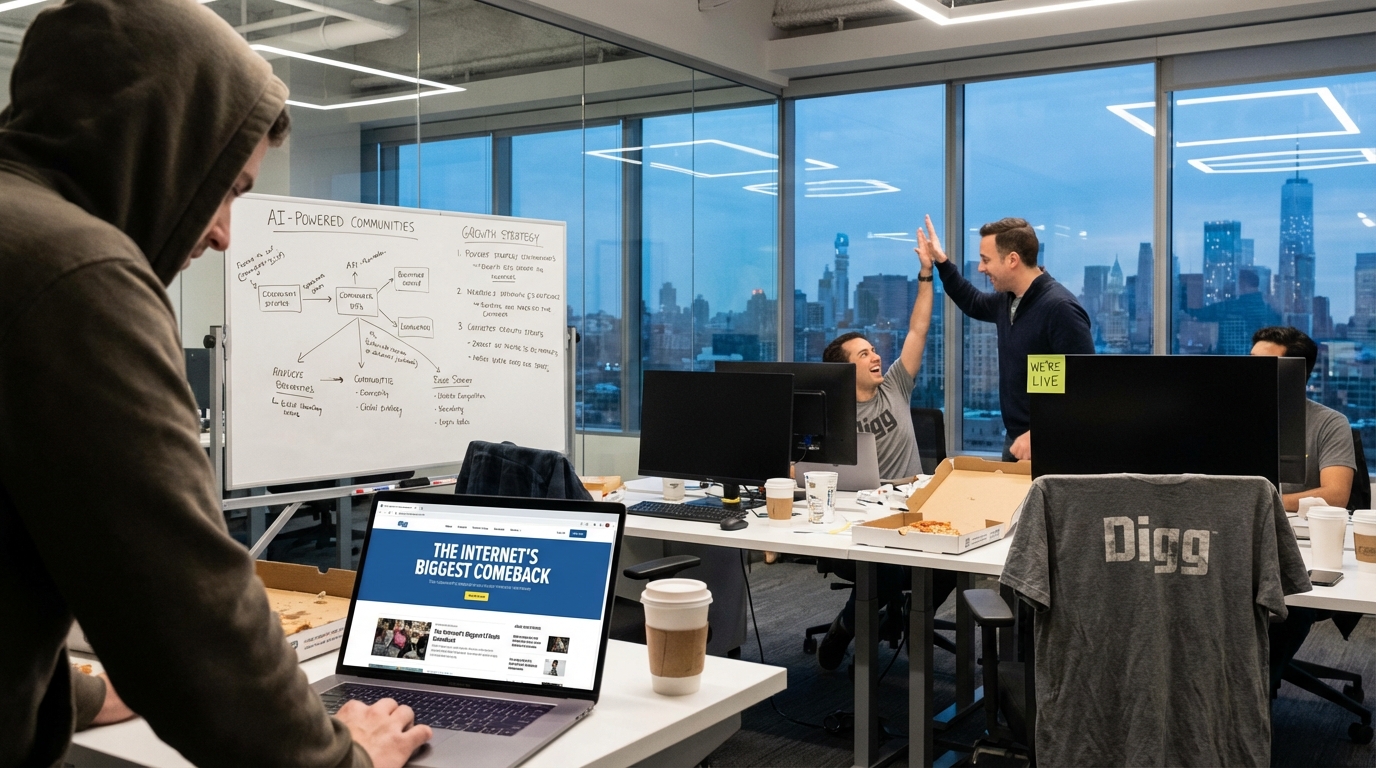
The headline is real. On January 14, 2026, Digg opened its doors again. After months of testing with a small group of people, the platform is now in “open beta.” This means anyone can join.
For a long time, Digg was just a shadow of its former self. But now, it is back to being a place where users run the show.
The reboot is being led by a “dream team.” Kevin Rose, the man who originally founded Digg way back in 2004, has returned. But he isn’t alone. He has teamed up with Alexis Ohanian. If that name sounds familiar, it should. Alexis Ohanian is the co-founder of Reddit – the very site that crushed Digg years ago.
Together, they bought Digg back in 2025. They have backing from major venture capital firms like True Ventures and Seven Seven Six.
The new platform includes:
- A website and mobile apps.
- Communities that look and feel a bit like Reddit.
- The ability for anyone to create their own community.
- The classic voting system where you “digg” (upvote) posts.
This is the first time since the “Web 2.0” days that Digg is trying to be a massive social platform again.
A History Lesson: The Rise and Fall
To understand why this is such a big deal, we have to look at the past.
The Golden Era (2004–2010)
Digg started in 2004. It was simple. Users submitted links. If people liked the link, they would “digg” it. If they didn’t, they would “bury” it. The best stuff floated to the top.
It was huge. People called it “the homepage of the internet.” At its peak around 2008, the company was valued at around $160 million to $175 million. It was one of the hottest startups in Silicon Valley.
The Crash (2010)
Then, things went wrong. In 2010, Digg launched a redesign of their site. The users hated it. They felt the company wasn’t listening to them.
This led to a mass exodus. Millions of users left Digg and moved to a newer, simpler site called Reddit. It is a classic lesson for any startup founder: if you stop listening to your users, they will leave.
The “Zombie” Years (2012–2024)
By 2012, the original Digg was broken up and sold for parts. The brand was bought by a company called Betaworks. Later, it was sold to an advertising company. For over a decade, Digg was just a news site with editors picking stories. It wasn’t a social network anymore.
But Kevin Rose never forgot about his creation.
The 2025 Buyback: A New Hope
In March 2025, something surprising happened. Kevin Rose and Alexis Ohanian announced they had bought Digg back.
This is a fascinating turn of events for anyone interested in venture capital and fundraising. Two rivals – the founder of Digg and the co-founder of Reddit – joining forces.
Here is how the new leadership looks:
- Kevin Rose: Founder & board chair. He is also a partner at True Ventures.
- Alexis Ohanian: Co-owner and board member through his firm, Seven Seven Six.
- Justin Mezzell: The new CEO, who is very focused on design.
They didn’t just buy the name; they bought the dream. Their goal is to build a “community-first” platform. They want it to be less toxic than modern social media. They also want to use Artificial Intelligence (AI) to help run the place, but not to replace the humans.
Building the Hype: The “Groundbreakers”
Before Digg launches its new Reddit rival to the public today, they spent months building hype.
In April 2025, they launched a program called “Groundbreakers.” This was a paid early-access group. For a $5 fee, users could reserve their username and get a sneak peek.
Why charge money? Two reasons:
- A “Humanity Check”: It proves you aren’t a robot.
- Charity: The money was donated to nonprofits like The Nature Conservancy and Code.org.
The program was capped at about 23,000 members, and it sold out by April 21, 2025. This showed that people were still interested in the Digg brand.
They also made smart hiring moves. They brought in Christian Selig as an advisor. Christian is the developer who built “Apollo,” a very popular app for Reddit that was shut down in 2023. By bringing him on board, Digg sent a clear message: we love developers and power users.
Inside the New Product
So, what does the new Digg actually look like?
The Basics
It runs in your browser and has mobile apps. There is a main feed and feeds for specific communities. Just like the old days, you can post links, write comments, and vote.
Communities for Everyone
In the early testing phase, there were only about 21 broad categories. But now, anyone can create a community. These are run by “community managers” (moderators). These managers can set rules and will eventually be able to change how their community looks.
Transparency
One of the coolest features is the public moderation log. In many online places, if a post gets deleted, you never know why. On the new Digg, the logs are public. You can see bans and rule changes. This is a huge step for trust.
AI as a Helper
The new Digg is built for the AI era. They have a feature called “Digg Intelligence.” This gives you a “TL;DR” (Too Long; Didn’t Read) summary of articles.
They also use AI to help with moderation. The AI tries to detect if a post fits the “vibe” of a community. However, the team has promised that AI is just a tool. Human judgment is still the most important thing.
Trust and Verification
They are also testing new ways to prove who you are without giving away your private data. They are looking at “zero-knowledge proofs.” This is a fancy tech term for proving something is true (like “I own this product”) without revealing your name or address.
The Strategy: David vs. Goliath
Why launch a Reddit rival now? Reddit is huge. It is a public company with millions of users.
The answer lies in timing. Over the last few years, Reddit has faced some backlash. They changed their API pricing, which killed off beloved apps like Apollo. Many moderators felt mistreated.
Kevin Rose and Alexis Ohanian see an opening. They believe that as the web gets filled with AI-generated spam, people will want a place that feels “human.”
They are differentiating Digg in a few key ways:
- Tone: They want to avoid the “toxic” arguments that happen on other sites.
- AI Infrastructure: Using AI to help clean up the mess, not to create it.
- Respect for Mods: They are openly discussing how to support and maybe even compensate moderators.
Experts are watching closely. Sarah Gilbert from Cornell University noted that while AI moderation is helpful, it isn’t perfect. Digg’s success will depend on how well they balance the tech with the people.
What This Means for Startups and Founders
You might be wondering, “I’m building a company. Why do I care about a social news site?”
This story is actually all about fundraising and outreach.
Think about it. Kevin Rose and Alexis Ohanian are two of the most successful founders in the world. They are also investors. They understand that the current way people connect online is broken.
Startups face a similar problem every day. You have a great product. You have a great vision. But how do you get people to listen? How do you find the right investors in a noisy world?
The Problem of Connection
Just like users are tired of spammy social feeds, investors are tired of spammy inboxes.
Traditional fundraising is hard. Founders often spend 6 months or more researching investors. They send cold emails that look like they were written by a robot. The reply rates are low. It is inefficient and frustrating.
This is exactly the problem we are solving at HeyEveryone. We know that cold outreach is usually ineffective because it is impersonal.
The Solution is Relevance
Digg is trying to fix social media by making it relevant and human again. HeyEveryone is doing the same for investor outreach.
Our AI-driven solution automates the process. But we don’t just blast out emails. Our tool identifies the right investors for your specific startup. It looks at their social activity, their news mentions, and their past investments.
Then, it writes a highly personalized email. It mirrors your voice. It mentions details that actually matter to that investor.
The result?
- 15-20% reply rates.
- 2-3% meeting booking rates.
- These numbers are 10x higher than the industry average.
Just as Digg is using AI to create a better community experience, HeyEveryone uses AI to create better fundraising experiences. We charge a founder-friendly price of just $2 per investor reached, which includes the first email and two follow-ups.
We are redefining the fundraising journey so you can focus on building your business – perhaps even building the next Digg.
The Verdict: Can Digg Win?
It is too early to say if Digg will overtake Reddit. The “Reddit killer” narrative is mostly something the media likes to say to get clicks.
However, Digg has a shot at becoming a strong alternative. They have the history. They have the funding. And most importantly, they have a team that understands what users want right now: a place that feels real.
The launch on January 14, 2026, is just the beginning. The team plans to ship updates weekly. They are “building the plane as they fly it.”
Whether you are a power user looking for a new home, or a founder looking for lessons in resilience, Digg’s return is the most exciting story in tech this week.
The internet loves a comeback. Will you be joining the new Digg?
Frequently Asked Questions
When did Digg officially relaunch as a Reddit rival?
Digg relaunched on January 14, 2026, entering open beta after months of private testing with early-access members.
Who is leading the Digg reboot?
The reboot is led by Kevin Rose (Digg’s original founder) and Alexis Ohanian (Reddit’s co-founder), backed by True Ventures and Seven Seven Six.
What is the “Groundbreakers” program?
Groundbreakers was a $5 early-access program launched in April 2025 that allowed users to reserve usernames and test the platform before public launch. The fee was donated to charity.
How does the new Digg use AI?
Digg uses AI for content summaries (TL;DR), moderation assistance, and community vibe detection. However, the team emphasizes that human judgment remains central to decision-making.
What makes the new Digg different from Reddit?
Digg features public moderation logs for transparency, a focus on reducing toxicity, AI-powered tools, and a commitment to supporting moderators—potentially even compensating them.
Why did the original Digg fail?
Digg failed after a 2010 redesign that users hated. The company stopped listening to its community, leading to a mass exodus to Reddit.
Can anyone create a community on the new Digg?
Yes, the new Digg allows anyone to create and manage their own communities, similar to Reddit’s subreddit model.
How is HeyEveryone related to the Digg story?
HeyEveryone draws parallels between Digg’s community-first approach and the challenges startups face in investor outreach. Just as Digg uses AI to improve user connections, HeyEveryone uses AI to personalize and optimize fundraising outreach.